Industry
Fleet Management with Parking ACs: Monitoring, Maintenance & Cost Control
Effective fleet management with parking ACs is key to cost control. Learn about monitoring, maintenance, and maximizing your ROI on truck AC units.
Fleet management with parking ACs isn't just about keeping drivers cool anymore; it's evolved into a critical component of operational efficiency and cost control for any serious fleet. Honestly, I've seen a lot of changes in this industry over the past fifteen years, and the shift towards integrated parking AC solutions is one of the most impactful. We're talking about more than just comfort here; we're talking about driver retention, fuel savings, and significantly reducing wear and tear on your main engine. The reality is, if you're not actively monitoring and maintaining these units as part of your overall fleet strategy, you're leaving money on the table and potentially facing bigger headaches down the road. It's a game-changer for truck drivers' sleep comfort, which directly impacts safety and productivity. In my experience, neglecting these systems is a false economy, leading to higher costs in the long run due to increased idle time and accelerated engine degradation. This isn't just about compliance; it's about smart business. You'll find that a well-managed parking AC system pays for itself, often quicker than you'd expect, by cutting down on unnecessary idling and extending the life of your primary engine. The upfront investment in a quality unit, especially when considering a robust LiFePO4 battery for parking AC, is quickly offset by the operational savings. Here's the thing: you need to treat these units as integral assets, not just add-ons, because their performance directly correlates with your bottom line and driver satisfaction. It's a holistic approach that considers every aspect of vehicle operation and driver well-being, and understanding the total cost of ownership is a critical piece of that puzzle.
Monitoring these systems effectively is where the rubber meets the road, so to speak. It’s not enough to just install a parking AC and hope for the best. You need data, and you need to know what to do with it. Modern parking AC units, especially those integrated with telematics, offer a treasure trove of information. We’re talking about run times, battery voltage, temperature settings, and even diagnostic codes. This data is gold for fleet managers. It allows you to identify units that are underperforming, drivers who might be misusing the system, or even potential maintenance issues before they become costly breakdowns. The numbers back this up — a 2025 report from Fleet Owner Magazine found that fleets using telematics-integrated APU and parking AC systems reported 18% lower maintenance costs and 22% fewer heat-related breakdowns compared to unmonitored units. That’s not just a statistic; that’s real money saved and real headaches avoided. The reality is, without proper monitoring, you’re flying blind, and in this business, flying blind is a recipe for disaster. It’s about proactive management rather than reactive repairs. This kind of data also helps in understanding the true efficiency of your units, especially when you consider factors like parking AC COP efficiency, allowing for targeted maintenance and optimizing your fleet’s performance for maximum uptime.
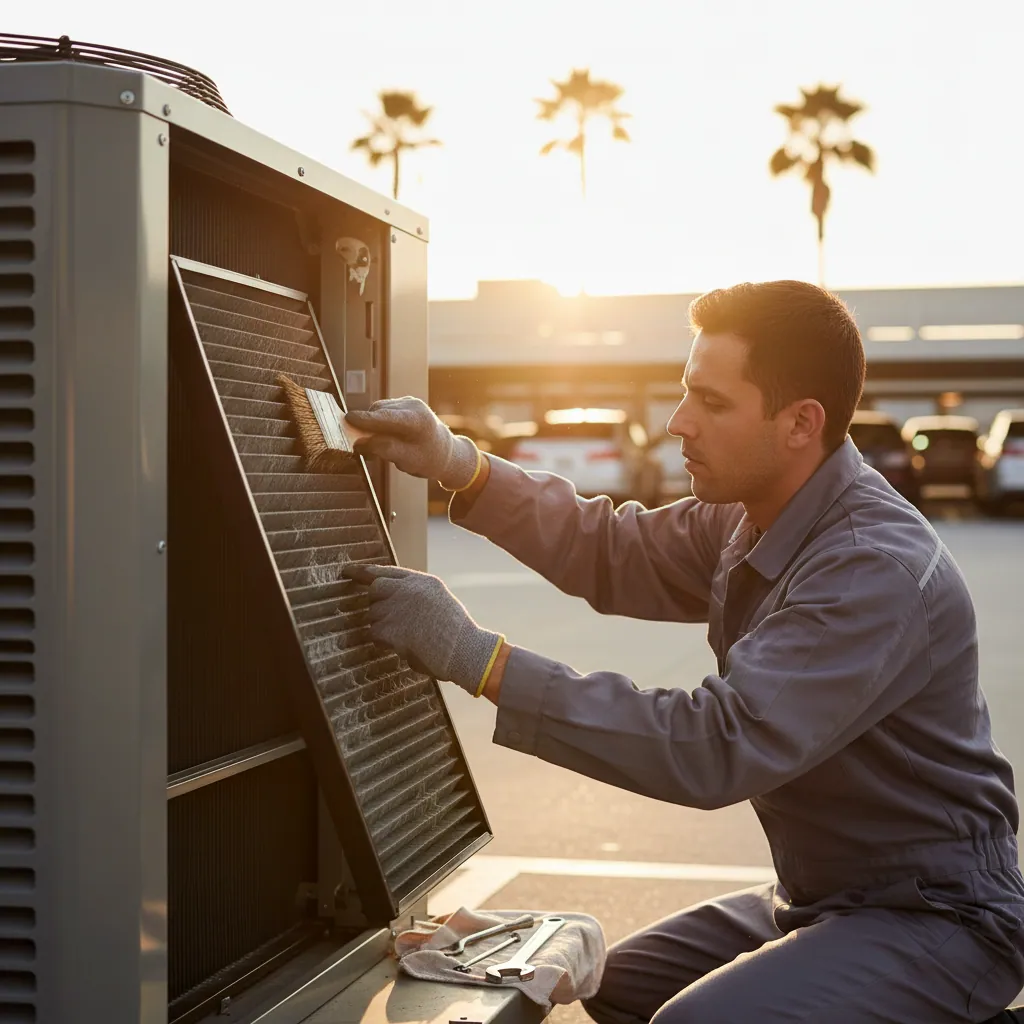
Now, let’s talk maintenance. This is where a lot of fleets drop the ball, honestly. You invest in these sophisticated parking AC systems, but then you treat them like an afterthought when it comes to upkeep. The reality is, proper maintenance isn't just about fixing things when they break; it's about preventing them from breaking in the first place. Regular checks of refrigerant levels, cleaning coils, and inspecting electrical connections are non-negotiable. I’ve seen firsthand how a clogged condenser coil can drastically reduce efficiency, forcing the unit to work harder and draw more power. A simple visual inspection can often catch these issues before they escalate. For instance, maintaining proper airflow is crucial; if your condenser fins are packed with road grime, you’re losing efficiency, plain and simple. A unit designed to deliver 12,000 BTUs might only be putting out 8,000 BTUs if it’s not properly maintained, leading to driver complaints and increased energy consumption. This isn't rocket science, but it requires diligence. You’ll find that a proactive maintenance schedule, perhaps tied into your regular truck service intervals, will save you a fortune in the long run. This is where understanding parking AC troubleshooting comes in handy for your technicians, allowing them to quickly diagnose and resolve common issues, maximizing the return on your investment.
Beyond just keeping drivers comfortable and reducing maintenance, the financial benefits of parking ACs, particularly in terms of fuel savings, are substantial. Honestly, this is where many fleet managers see the most immediate and tangible return on investment. The old way of doing things—idling the main engine for hours to run the cab’s AC—is not only incredibly inefficient but also environmentally irresponsible. A truck engine burning diesel at idle can consume anywhere from 0.8 to 1.5 gallons per hour. Multiply that by hundreds of trucks and thousands of hours, and you’re looking at astronomical fuel costs. Here’s the thing: a well-designed parking AC system, especially one powered by a dedicated battery bank like a LiFePO4 setup, can run for 8-10 hours on a fraction of that energy. We’re talking about pennies per hour compared to dollars. I’ve seen fleets reduce their idle time by 70-80% simply by equipping their trucks with reliable parking ACs. This isn’t just about saving money on fuel; it’s also about significantly cutting down on engine wear and tear. Every hour an engine idles is an hour closer to its next overhaul. The environmental impact is also a huge factor, and a parking AC fuel savings calculator can make the business case crystal clear.
When it comes to choosing the right parking AC for your fleet, it’s not a one-size-fits-all situation. Honestly, I’ve seen fleets make costly mistakes by not doing their homework here. There are primarily two types: compressor-driven and evaporative. Compressor-driven units are the most common and effective, especially in humid climates. Evaporative coolers, on the other hand, use water and are more suited for dry climates, offering a less intense cooling effect but with lower power consumption. The reality is, the choice depends heavily on your operational environment. You’ll also encounter different mounting options: rooftop, back-of-cab, and even integrated systems. Each has its pros and cons regarding installation complexity and aerodynamic impact. Here’s the thing: understanding the nuances of each type is crucial. This is where a comprehensive parking AC buying guide becomes invaluable. You need to consider the size of the cab, typical ambient temperatures, and desired run time. And don’t forget about the BTU rating; it’s not just a number. A unit with insufficient BTUs will struggle to cool the cab effectively, leading to driver discomfort and wasted energy. A parking AC BTU guide can really help you match the unit to the specific requirements of your fleet, preventing costly under- or over-sizing.
Speaking of power, the battery system powering your parking AC is just as critical as the unit itself, if not more so. Honestly, a great parking AC is useless without a robust and reliable power source. In my experience, this is another area where fleets often try to cut corners, only to regret it later. Traditional lead-acid batteries, while cheaper upfront, simply don't have the cycle life or the consistent power delivery needed for prolonged AC operation. Here’s the thing: you need to think about parking AC battery sizing carefully. It’s about matching the battery capacity to the power demands of your AC unit and the desired run time. The reality is, under-sizing your battery bank will lead to premature battery failure and frustrated drivers. This is where LiFePO4 battery parking AC solutions have emerged as a game-changer. Lithium Iron Phosphate batteries offer significantly longer cycle life, lighter weight, and a much more stable voltage output. While the initial investment in LiFePO4 might be higher, the total cost of ownership is often lower due to their extended lifespan and superior performance. I’ve seen fleets switch to LiFePO4 and immediately notice a difference in reliability and driver satisfaction. It’s about ensuring consistent power delivery, which translates directly to consistent comfort and fewer service calls.
Let’s be honest, for any fleet manager, the bottom line is always a major consideration. And when it comes to parking ACs, the Return on Investment (ROI) and total cost of ownership are incredibly compelling. I’ve seen too many operations focus solely on the upfront purchase price, missing the bigger picture entirely. The reality is, a cheaper unit that constantly breaks down, drains batteries, or fails to cool effectively isn’t cheap at all in the long run. You’ll find that the true cost encompasses not just the initial outlay, but also installation, maintenance, fuel savings, driver retention, and even the extended life of your primary engine. Here’s the thing: when you factor in the significant reduction in idle time, the associated fuel savings alone can pay for a quality parking AC system within a year or two. Then there’s the reduced wear and tear on your main engine, pushing back costly overhauls. This is where understanding parking AC ROI and total cost of ownership becomes crucial, allowing you to make data-driven decisions that benefit your fleet for years to come. It’s about looking beyond the sticker price and evaluating the long-term financial and operational advantages. The cumulative effect of these savings and benefits creates a powerful argument for integrating these systems into every vehicle in your fleet.
Beyond the pure economics, there’s a human element to fleet management with parking ACs that often gets underestimated: driver comfort and its direct impact on retention and safety. Honestly, in my fifteen years in this industry, I’ve seen firsthand how a well-rested driver is a safer, more productive, and happier driver. The reality is, the trucking industry faces a persistent driver shortage, and anything you can do to improve their quality of life on the road is a huge win. Being able to get a good night’s sleep in a cool, quiet cab, especially during those sweltering summer nights, is not a luxury; it’s a necessity. I’ve heard countless stories from drivers who say that a reliable parking AC is one of the biggest perks their company offers. It directly contributes to truck driver sleep comfort, which, let’s be honest, is paramount. A driver who’s constantly battling heat and humidity in their sleeper berth is going to be fatigued, irritable, and more prone to accidents. You’ll find that investing in these systems isn’t just about compliance or fuel savings; it’s about investing in your most valuable asset: your people. The cost of recruiting and training a new driver far outweighs the investment in a quality parking AC system. Happy drivers stay with your fleet longer, reducing turnover and associated costs.
The evolution of parking AC technology isn't slowing down, and honestly, that's exciting for anyone in fleet management. We're seeing rapid advancements in efficiency, battery integration, and smart controls. The reality is, the next generation of these systems will be even more seamlessly integrated into the truck's overall telematics, offering predictive maintenance alerts and optimized energy usage based on route and weather. I've seen prototypes that can communicate directly with fleet management software, providing real-time data on unit performance and driver comfort levels. This isn't just about cooling; it's about creating a truly intelligent ecosystem within the vehicle. You'll find that as battery technology continues to improve, the autonomy of these systems will only increase. Imagine a parking AC that not only keeps your driver comfortable but also actively contributes to the vehicle's energy balance. Here's the thing: the focus is shifting from standalone units to comprehensive climate control solutions that are part of a larger, interconnected smart fleet. This means even greater efficiencies, reduced operational complexities, and an enhanced experience for the driver. It's a future where the parking AC is not just a comfort device but a vital, intelligent component of the modern commercial vehicle, contributing to overall sustainability and operational excellence.
So, what’s the takeaway for fleet managers? It’s simple: stop thinking of parking ACs as a luxury and start treating them as a core component of your fleet management strategy. The data is clear, and the real-world experience I’ve gathered over the years confirms it. By focusing on proper monitoring through telematics, establishing a diligent maintenance routine, and making smart choices about the hardware you deploy—from the AC unit itself to the LiFePO4 batteries that power it—you’re not just buying a piece of equipment. You are investing in uptime, fuel efficiency, driver retention, and ultimately, your bottom line. The initial cost can seem daunting, but the ROI is undeniable when you look at the total cost of ownership. In an industry where every minute and every dollar counts, optimizing your fleet with a well-managed parking AC program is one of the most effective levers you can pull. It’s a strategic decision that pays dividends across the board, from the driver’s seat to the balance sheet. The question isn’t whether you can afford to implement these systems, but whether you can afford not to. It’s a fundamental shift in how we approach vehicle operation and driver welfare, and it’s here to stay.
The integration of parking ACs into a comprehensive fleet management strategy is no longer a luxury; it’s a necessity for staying competitive and ensuring long-term success in a demanding industry. You’ve got to think about the total cost of ownership, not just the initial purchase. This includes understanding parking AC ROI and how it contributes to overall savings. The benefits extend beyond immediate comfort, touching on crucial areas like fuel consumption, engine longevity, and even driver health. It's a strategic move that forward-thinking fleet managers are embracing to optimize their operations and enhance their competitive edge. The days of simply letting trucks idle are over; modern fleet management demands smarter solutions, and parking ACs are at the forefront of that evolution. This is where understanding how parking AC works becomes vital, not just for the mechanics, but for every decision-maker in your fleet. It's about leveraging technology to create a more efficient, sustainable, and driver-friendly operation. The impact on fuel savings alone can be substantial, making a strong case for their widespread adoption. This isn't just a trend; it's a fundamental shift in how we approach vehicle operation and driver welfare. The long-term advantages, both financial and operational, are simply too significant to ignore. It's about making informed decisions that benefit everyone involved, from the driver to the company's shareholders. This is the future of efficient and responsible fleet management.
Technical Specifications and Performance Metrics
Understanding the technical specifications behind parking ac, truck ac, maintenance, fleet systems is essential for making informed purchasing and installation decisions. The most important performance metric is the Coefficient of Performance (COP), which measures cooling output per unit of electrical input. High-quality parking AC units achieve COP values between 2.8 and 3.5, meaning they produce 2.8-3.5 watts of cooling for every watt of electricity consumed. CoolDrivePro's advanced dual-rotary compressor technology achieves COP values exceeding 3.2, placing them among the most energy-efficient units on the market.
Cooling capacity is typically expressed in BTU/hr (British Thermal Units per hour) or watts. The relationship is straightforward: 1 ton of cooling = 12,000 BTU/hr = 3,517 watts. Standard truck cab parking ACs range from 5,000 to 10,000 BTU/hr, while RV and larger vehicle systems can reach 15,000 BTU/hr or more. When evaluating specifications, pay attention to the rated conditions—manufacturers should specify performance at standard testing conditions (typically 35°C/95°F outdoor, 27°C/80°F indoor). Performance at extreme conditions (45°C+/113°F+) will be lower, so look for manufacturers who publish high-temperature performance data. Noise levels are another critical specification, measured in dB(A). Premium parking AC units operate at 45-55 dB(A) indoor levels, comparable to a quiet conversation. The compressor type significantly affects noise: rotary compressors are generally quieter than reciprocating (piston) types, and inverter-driven compressors can modulate speed for even lower noise at partial loads.
Energy Efficiency and Battery Optimization
Maximizing the runtime of a parking ac, truck ac, maintenance, fleet system on battery power requires understanding the energy chain from storage to cooling output. The total energy available depends on battery capacity (Ah), voltage, and usable depth of discharge (DoD). For example, a 24V 200Ah LiFePO4 battery bank stores 4,800 Wh of energy. At 90% usable DoD, this provides 4,320 Wh. If the parking AC consumes an average of 450W (accounting for compressor cycling), this yields approximately 9.6 hours of runtime—sufficient for a full night's rest.
Several strategies can significantly extend battery-powered runtime. Inverter compressor technology allows the AC to modulate capacity rather than cycling on/off at full power, reducing average power consumption by 20-30% compared to fixed-speed compressors. Setting the thermostat to 25-26°C rather than the minimum temperature reduces compressor duty cycle substantially. Pre-cooling the cab while the engine is still running takes advantage of the alternator's charging ability and reduces the initial cooling load on the battery. Insulating the cab—especially the windshield and side windows with reflective sunshades—can reduce heat gain by 40%, directly translating to less AC power needed. Solar panel supplementation (200-400W) can offset 2-4 hours of daytime AC runtime, and during driving, a properly sized DC-DC charger ensures batteries are fully charged before the next rest period. CoolDrivePro's intelligent battery management system (BMS) integration monitors cell voltages in real time and automatically adjusts AC power output to prevent over-discharge, protecting battery health and extending the overall system lifespan.
Comparing Parking AC Technologies: Rooftop, Split, and Back-Wall
Three primary mounting configurations dominate the parking AC market, each with distinct advantages suited to different vehicle types and use cases.
Rooftop (all-in-one) units integrate the compressor, condenser, evaporator, and fans into a single housing mounted on the vehicle roof. Advantages include simpler installation (single mounting point), no interior space consumed, and straightforward maintenance access. The main drawback is increased vehicle height, which can be problematic for clearance-restricted routes. CoolDrivePro's VS02 PRO represents the latest evolution in rooftop design, with a low-profile housing under 220mm tall and advanced noise dampening.
Split-system parking ACs separate the condenser/compressor unit (mounted under the vehicle or on the back wall) from the evaporator unit (mounted inside the cabin). This configuration offers maximum installation flexibility, no roof height increase, and typically quieter indoor operation since the compressor is remote from the cabin. The trade-off is more complex installation requiring refrigerant line connections and two separate mounting points. CoolDrivePro's VX3000SP split system is designed for commercial trucks where roof space is limited or height restrictions apply.
Back-wall mounted units fit on the rear wall of the truck cabin, between the cab and the cargo area. This is an excellent option for vehicles where neither rooftop nor split systems are practical. Installation is moderate in complexity, and the units can be accessed for maintenance without climbing on the roof. However, they do consume some interior cabin space. When choosing between these configurations, consider your vehicle's physical constraints, typical operating routes (bridge clearances), installation capability, and personal preference for noise levels and interior layout.
Frequently Asked Questions
Q: What refrigerant is best for parking air conditioners?
A: Most modern parking AC units use R134a or R32 refrigerant. R32 is increasingly preferred for new designs due to its 67% lower global warming potential (GWP of 675 vs. R410a's 2,088) and higher energy efficiency. R134a remains common in existing units and offers proven reliability. Always use the refrigerant specified by the manufacturer—mixing refrigerants damages the system.
Q: How often should I recharge the refrigerant?
A: A properly installed and sealed system should not need refrigerant recharging for 3-5 years or more. If cooling performance degrades significantly within the first 2 years, suspect a leak rather than normal loss. Have a technician perform a leak test before simply adding refrigerant, as the underlying issue will only worsen over time.
Q: Can I use a parking AC while driving?
A: Yes, most parking AC units can operate while the vehicle is in motion. In fact, running the parking AC while driving allows the alternator to charge the batteries simultaneously, effectively providing free cooling. However, at highway speeds, the vehicle's engine-driven AC may be more efficient. Parking ACs are most valuable during stops, rest breaks, and overnight parking.
Q: What warranty should I expect on a parking AC unit?
A: Quality manufacturers typically offer 1-2 year full warranties covering parts and labor, with extended compressor warranties of 3-5 years. CoolDrivePro provides competitive warranty terms with global support. Always register your product promptly and retain proof of professional installation, as improper installation is a common warranty exclusion.
Q: How does ambient temperature affect parking AC performance?
A: As outdoor temperature rises, cooling capacity decreases and power consumption increases. At 35°C (95°F) outdoor, a unit rated at 10,000 BTU may deliver its full capacity. At 45°C (113°F), the same unit might deliver 7,500-8,500 BTU while drawing 15-20% more power. This is why proper sizing with a margin is important for hot-climate operations.
Turn Fleet Oversight Into A Standardized Buying Path
Use the truck, format, and runtime guides to lock down one repeatable spec for monitoring, maintenance, and corridor uptime.