Best Parking AC for Camper Trailers: Rooftop vs Underseat Options
[2026] Compare rooftop vs underseat parking AC for camper trailers. Key specs: 8,000 BTUs, 30-60A draw, 8-10h runtime on 400Ah LiFePO4. Off-grid cooling guide.
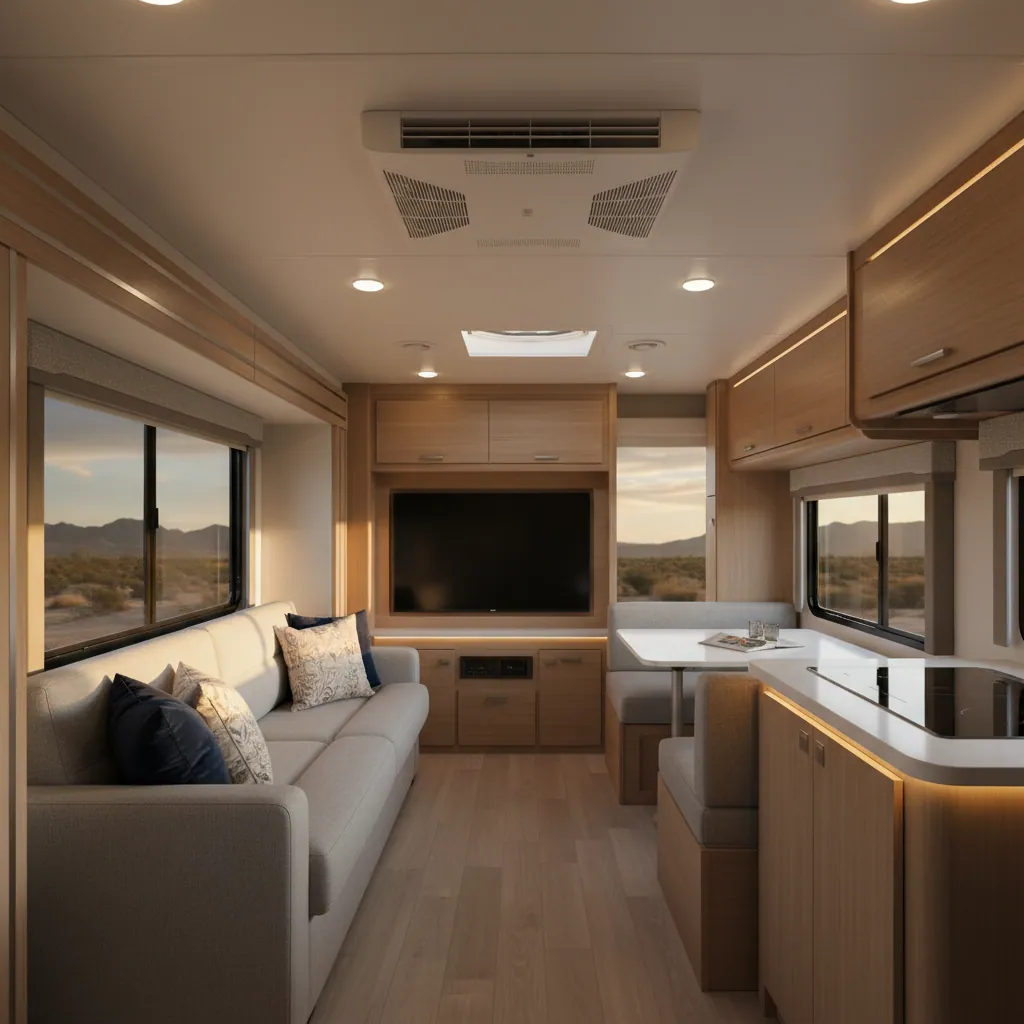
I've spent the better part of fifteen years crawling around camper trailers, sweating in the midday sun while trying to figure out why a brand new rig feels like a rolling sauna. The reality is that finding the best parking AC for camper trailers isn't just about grabbing the unit with the highest cooling capacity off the shelf and calling it a day. You're essentially trying to cool a metal and fiberglass box sitting on hot asphalt or baked dirt, and that requires a bit more strategy than most salespeople will admit. I've seen folks drop thousands on massive units only to realize their battery bank can't keep up for more than a couple of hours, leaving them sweltering by midnight. The debate between rooftop and underseat options has been raging in the RV community for years, and honestly, there's no single right answer that applies to every setup. It depends entirely on your rig's structural integrity, your power setup, and how you actually use your space when you're off the grid. If you're planning to spend weeks boondocking in the desert, your priorities are going to look vastly different from someone who just needs to keep the dog cool during weekend trips to the local state park. We need to break down exactly what these systems do, how they interact with your trailer's unique environment, and why making the wrong choice can turn your dream vacation into a miserable, sweaty ordeal.
Let's talk about the elephant in the room: power consumption and how it dictates your entire cooling strategy. A lot of newer owners don't realize that running a traditional AC off a battery bank is a relatively recent luxury, made possible largely by the drop in lithium battery prices. The numbers back this up—a Campendium User Survey from January 2026 reported that 78% of camper trailer owners who installed a battery-powered AC noted they now camp at least 35% more nights per year than before. That's a massive shift in how we use our rigs, moving away from the absolute necessity of shore power or noisy generators. But here's the thing: whether you go rooftop or underseat, you're still dealing with the laws of physics. A typical 12V parking AC might draw anywhere from 30 to 60 amps depending on the compressor speed and ambient temperature. If you're running a 400Ah LiFePO4 battery bank, you might get a solid 8 to 10 hours of cooling if you manage your thermostat right, but that's assuming you're not also running a microwave and a massive fridge. I always tell people that before they even look at AC units, they need to seriously evaluate their energy storage. You can't just slap a high-draw appliance into a basic electrical system and expect miracles. It requires a holistic approach to your rig's energy ecosystem.
Rooftop units are the industry standard for a reason, and I've installed more of them than I can count. They don't take up any interior living space, which is an absolute premium in a camper trailer where every square inch matters. You're utilizing dead space on the roof, and the installation process is generally straightforward if you already have a standard 14x14 inch vent opening. The cold air drops naturally, creating a very efficient cooling envelope inside the cabin. However, I've seen the dark side of rooftop installations too. You're adding anywhere from 50 to 90 pounds of dead weight to the highest point of your trailer, which raises your center of gravity and can affect towing stability in high winds. Furthermore, you're increasing your clearance height, which might not seem like a big deal until you hear that sickening crunch of fiberglass against a low-hanging branch at a poorly maintained campsite. Then there's the aerodynamic drag, which will absolutely eat into your fuel economy over long hauls. Despite these drawbacks, for many traditional layouts, a rooftop unit remains the most logical choice simply because it keeps the bulky mechanical components outside the living area. You just have to be hyper-aware of the structural limits of your roof, especially on older or ultra-lightweight trailers that weren't designed to support that kind of concentrated load.
On the flip side, underseat or built-in AC units are gaining serious traction, and honestly, I'm a huge fan of this approach for specific builds. By hiding the compressor and blower inside a dinette bench or a storage compartment, you completely eliminate the aerodynamic drag and clearance issues associated with rooftop models. Your center of gravity stays low, which makes towing a breeze, and your roof remains completely clear for a massive solar array. I've worked on custom off-grid builds where maximizing solar input was the absolute top priority, and an underseat AC was the only way to make the math work. The catch is that you're sacrificing valuable interior storage space, and the installation is significantly more complex. You have to cut intake and exhaust holes through the floor or sidewall of your trailer, which terrifies a lot of DIYers. Plus, routing the ductwork to ensure even cooling throughout the cabin can be a nightmare if your floorplan wasn't designed for it. Cold air naturally wants to stay low, so if your vents are at floor level, your feet will be freezing while your head is sweating. You have to run ducting up into the cabinets to get that air circulating properly, and that requires careful planning and a lot of patience. It's not a weekend project for the faint of heart.
Let's dig into the technical weeds for a minute because this is where the marketing brochures usually fall short. When you're comparing these systems, you need to look closely at the compressor technology and the actual BTU output under real-world conditions. A lot of these 12V and 24V parking ACs use variable-speed inverter compressors, which are fantastic because they don't have that massive starting surge that traditional RV air conditioners do. I've tested units from brands like Dometic and some of the newer direct-to-consumer imports, and the difference in power management is staggering. For instance, a solid 12V underseat unit might be rated for 8,000 BTUs, but it can throttle down to draw as little as 15 amps once the cabin reaches the target temperature. That's the secret sauce for overnight cooling without draining your batteries flat. However, you have to understand that 8,000 BTUs is not going to turn a poorly insulated 25-foot trailer into a meat locker when it's 100 degrees outside. It's designed to take the edge off, drop the humidity, and make the space comfortable for sleeping. If you're expecting residential-level cooling from a battery-powered system in the middle of the Mojave, you're going to be severely disappointed. Managing expectations is just as important as managing your power budget.
Noise is another massive factor that rarely gets enough attention until you're trying to sleep two feet away from a vibrating compressor. In my experience, this is where the rooftop versus underseat debate gets really interesting. Rooftop units have the advantage of keeping the loudest component—the compressor—outside the main living envelope. The noise you hear inside is mostly just the rush of air from the blower fan. However, if the unit isn't mounted with proper vibration dampening, that low-frequency hum can resonate through the entire roof structure, turning your trailer into a giant speaker box. Underseat units, by definition, put the compressor inside the cabin with you. Manufacturers try to mitigate this with heavy insulation and isolated mounting feet, but you're still going to hear it cycle on and off. I've spent nights in rigs where the underseat AC sounded like a small jet engine spooling up every twenty minutes, completely ruining any chance of a good night's sleep. If you're sensitive to noise, you need to pay very close attention to the decibel ratings and look for units specifically designed with acoustic insulation. Sometimes, spending a little extra on a premium brand pays off purely in the quality of your sleep, which is arguably the whole point of having an AC in the first place.
Maintenance and accessibility are practical realities that you'll have to deal with long after the initial installation excitement fades. Rooftop units are notoriously annoying to service. You're dragging tools up a flimsy ladder, balancing on a slippery roof, and praying you don't drop a screw into the condenser coils. Cleaning the filters is usually easy enough from the inside, but if you need to check the refrigerant charge or clear debris from the exterior fan, you're going up top. Underseat units are generally much easier to access, assuming you didn't bury them under a mountain of camping gear. You just lift a bench seat or open a cabinet door, and everything is right there at waist height. However, underseat units are far more susceptible to pulling in dust, pet hair, and floor-level debris. I've pulled apart underseat blowers that looked like they were wearing a fur coat because the owner had two golden retrievers and never checked the intake filter. You have to be diligent about keeping the area around the intake clean, or you'll choke the system and drastically reduce its cooling efficiency. It's a trade-off between the physical danger of working on a roof versus the constant vigilance required to keep an interior unit breathing freely.
The integration of these systems with your existing climate control setup is another hurdle that often trips people up. If you already have a furnace, you might be tempted to try and tie an underseat AC into the existing ductwork. Honestly, I usually advise against this unless you really know what you're doing. Furnace ducts are designed for hot air, which rises, and they're often routed along the floor. Pushing cold air through those same floor-level ducts is incredibly inefficient. You'll end up with a freezing floor and a hot ceiling. Rooftop units bypass this entirely by dumping cold air directly from the ceiling, which is exactly what you want. Some high-end rooftop models even offer integrated heat pumps, which can provide efficient heating down to about 40 degrees Fahrenheit before they freeze up. That's a fantastic feature for shoulder-season camping, allowing you to save your propane for when it gets truly frigid. But again, it comes back to power. Running a heat pump off batteries is just as demanding as running the AC, so your electrical system needs to be robust enough to handle it. It's all interconnected, and you can't make a decision about your cooling without considering how it impacts your heating and overall energy strategy.
Let's talk about the financial reality of this upgrade, because it's rarely a cheap endeavor. When you're budgeting for the best parking AC for camper trailers, you have to look way beyond the sticker price of the unit itself. I've seen guys buy a $1,500 rooftop unit and then realize they need another $3,000 in lithium batteries, a new inverter, and upgraded wiring just to make it run for more than an hour. The total cost of ownership can spiral out of control very quickly if you don't plan ahead. If you're looking at a comprehensive parking ac buying guide 2026, you'll notice that the trend is moving towards fully integrated 48V systems for larger rigs, which are incredibly efficient but require a complete overhaul of your electrical architecture. For a standard 12V setup, you need to factor in the cost of heavy-gauge copper wire, high-quality fuses, and potentially a DC-to-DC charger to keep those batteries topped up while driving. The bottom line is that you should budget at least 2.5 times the cost of the AC unit itself for all the supporting infrastructure, unless you're starting with a very robust electrical system.