Surviving Egypt's Summer: Truck Parking AC Solutions
Essential truck parking AC solutions for surviving Egypt's 50°C summer heat in 2026. Protect drivers with 9000 BTU cooling systems to maintain operations.
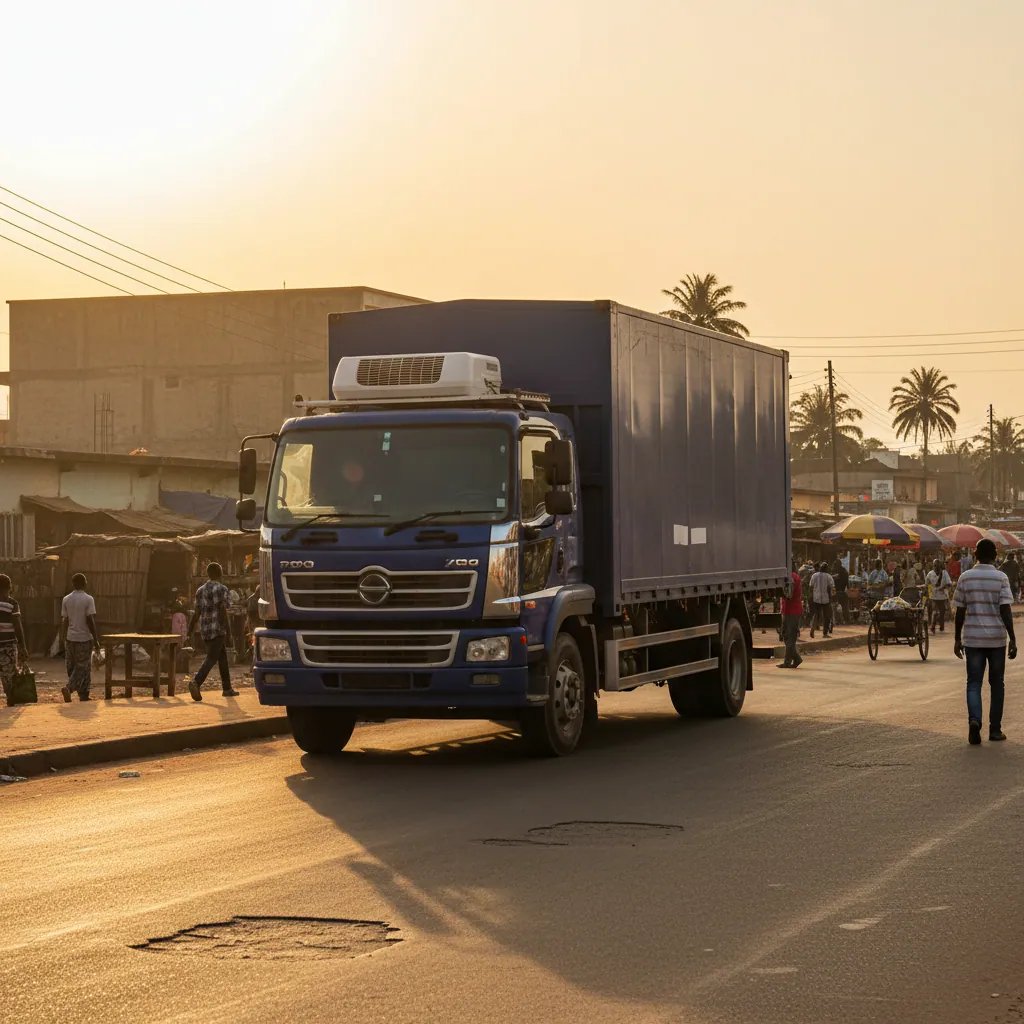
Egypt, the land of the Pharaohs and one of history's great civilizations, presents one of the world's most challenging environments for commercial transport operations. The country's location in the northeastern corner of Africa, dominated by the Sahara Desert and traversed by the Nile Valley, creates climatic conditions that test the limits of both human endurance and equipment performance. During the summer months from May through October, temperatures throughout much of Egypt regularly exceed 45°C, with the southern regions approaching 50°C. The combination of extreme heat, intense solar radiation, and often high humidity in the Nile Delta creates conditions where heat stress is a constant threat for anyone working outdoors—including the tens of thousands of truck drivers who keep Egypt's economy moving. In this environment, truck parking air conditioning is not a comfort feature but essential survival equipment.
The economic importance of Egypt's trucking sector is immense. As the most populous Arab nation with over 110 million people (2026 estimate), Egypt's economy depends on efficient logistics to move goods from the nation's ports—primarily Alexandria and Damietta on the Mediterranean and Suez and Ain Sokhna on the Red Sea—to destinations throughout the country. The agricultural produce of the Nile Delta, the manufactured goods of the industrial zones around Cairo and Alexandria, the petroleum products from the Gulf of Suez, and the consumer goods that supply Egypt's growing population all depend on truck transport. The drivers who operate these vehicles work in conditions that many would find unbearable, navigating not only the extreme heat but also the notorious traffic congestion of Cairo and other major cities.
Egypt's summer heat creates conditions that are genuinely dangerous for truck drivers. Temperatures inside parked vehicles exposed to direct sun can exceed 70°C within minutes, creating an oven-like environment that can cause severe burns from metal surfaces and steering wheels. The humidity of the Nile Delta and Mediterranean coast, while lower than tropical regions, still makes evaporative cooling less effective than in truly arid conditions. The combination of heat and pollution in urban areas creates additional health risks. For drivers who must take mandatory rest breaks during their shifts, often in areas with no shade or cooling facilities, the ability to retreat to an air-conditioned cabin is the difference between manageable working conditions and dangerous heat exposure.
The specific challenges of Egyptian summer operation require parking air conditioning systems with exceptional capacity and reliability. Standard cooling systems designed for milder climates simply cannot cope with the extreme temperatures and heat loads encountered in Egypt. Systems must have sufficient cooling capacity to bring cabin temperatures down to safe levels even when ambient temperatures approach 50°C. They must be able to operate efficiently under continuous high-load conditions, as drivers may need cooling for extended periods during rest breaks. They must be robust enough to withstand the vibration and dust that characterize Egyptian roads. And they must be reliable, as breakdowns in extreme heat can create immediate health emergencies.
The CoolDrivePro VS02 PRO has proven exceptionally capable in Egypt's extreme summer conditions. The unit's 9000 BTU cooling capacity provides the reserve necessary to achieve meaningful temperature reduction even in the most challenging conditions. The dual-rotary compressor technology maintains efficient operation under continuous high-load conditions, delivering consistent cooling when drivers need it most. The system's efficient power consumption maximizes runtime on battery power, essential for drivers who may need cooling for several hours during rest breaks. The robust construction withstands the challenging road conditions found throughout Egypt, from the smooth highways connecting major cities to the rougher tracks serving industrial and agricultural areas.
The geography of Egypt's transport corridors adds additional complexity to cooling requirements. The primary north-south axis along the Nile Valley spans over 1,000 kilometers from Alexandria to Aswan, traversing varying climate conditions from the Mediterranean-influenced north to the extreme desert of the south. The east-west routes connecting the Red Sea ports to the Nile Valley cross the Eastern Desert, where summer temperatures are among the highest on Earth. The Sinai Peninsula presents its own challenges, with extreme temperature variations between day and night. Truck air conditioning systems operating in Egypt must perform reliably across all these environments, maintaining driver comfort and safety regardless of location or season.
Driver health and safety considerations are paramount in Egypt's extreme heat environment. Heat stress can progress rapidly from discomfort to serious medical emergency, with heat stroke potentially fatal if not addressed promptly. The symptoms of heat stress—confusion, dizziness, nausea—can impair a driver's ability to recognize their own condition, making prevention through proper cooling essential. Egyptian labor laws and transport regulations increasingly recognize the dangers of heat exposure, and forward-thinking operators are investing in parking air conditioning as a fundamental safety measure. The cost of installing cooling systems is insignificant compared to the human and economic costs of heat-related accidents or health emergencies.
Installation of parking air conditioning in Egyptian trucks requires careful attention to the extreme conditions these systems must handle. Electrical systems must be upgraded to provide adequate capacity for sustained high-current operation, with many operators opting for lithium iron phosphate (LiFePO4) battery systems that offer superior performance in high-temperature conditions. Solar panel integration is increasingly popular, with Egypt's abundant sunshine providing excellent conditions for supplementary charging. The installation must also account for the dust and sand that pervade the Egyptian environment, ensuring that connections remain secure and components are protected. Professional installation by technicians familiar with extreme heat requirements is essential.
The urban transport environment in Egypt's major cities presents its own cooling challenges. Cairo, a megacity of over 22 million people (2026 estimate), is notorious for traffic congestion that can trap drivers in stationary vehicles for hours during the hottest parts of the day. The heat island effect raises temperatures in the city center several degrees above surrounding areas. The combination of traffic fumes, dust, and heat creates conditions where drivers are at significant risk even while stationary. Parking air conditioning allows drivers to maintain safe cabin temperatures while waiting in traffic or parked during loading and unloading operations, protecting their health and maintaining their ability to operate safely when traffic moves.
Maintenance protocols for parking air conditioning in Egypt must account for the extreme operating conditions. Air filters require frequent attention due to dust loading, with more frequent replacement necessary during the dusty summer months. Condenser coils must be kept clean to maintain heat transfer efficiency, which can be degraded by dust accumulation. Refrigerant levels should be monitored regularly, as systems operating continuously at maximum capacity are more susceptible to gradual losses. Electrical connections require inspection to ensure they remain secure despite the thermal cycling caused by extreme temperature variations. Egyptian operators who maintain rigorous preventive maintenance schedules report significantly better reliability.
The economic case for parking air conditioning in Egypt is compelling despite the challenging environment. Fuel savings from eliminated idling are significant, particularly given the long periods that drivers may spend stationary in traffic or at loading facilities. Reduced engine wear from eliminated idling hours extends vehicle life in a market where replacement vehicles are expensive. Improved driver welfare supports retention in a profession where experienced drivers are valuable assets. Safety improvements from well-rested drivers reduce accident rates and associated costs. When these factors are considered together, parking air conditioning represents a sound investment for Egyptian transport operators, with returns that justify the initial expenditure even in a challenging economic environment.
Looking forward, Egypt's transport sector will continue to face the challenge of operating in one of the world's most extreme climates. Climate change projections suggest that extreme heat events may become more frequent and intense, making effective cooling systems even more essential. As Egypt's economy continues to grow and diversify, the demand for efficient logistics will increase, placing greater demands on the trucking sector. Technologies that enable safe, efficient operation in extreme heat will become increasingly important for maintaining the flow of goods that drives economic development. Truck parking air conditioning is an essential component of this operational capability.
Ready to beat Egypt's summer heat with reliable truck cooling? Contact CoolDrivePro for extreme-weather solutions and wholesale pricing. Email: info@vethy.com | WhatsApp: +86 18561534326
Technical Specifications and Performance Metrics
Understanding the technical specifications behind parking ac, driver, cooling systems is essential for making informed purchasing and installation decisions. The most important performance metric is the Coefficient of Performance (COP), which measures cooling output per unit of electrical input. High-quality parking AC units achieve COP values between 2.8 and 3.5, meaning they produce 2.8-3.5 watts of cooling for every watt of electricity consumed. CoolDrivePro's advanced dual-rotary compressor technology achieves COP values exceeding 3.2, placing them among the most energy-efficient units on the market.
Cooling capacity is typically expressed in BTU/hr (British Thermal Units per hour) or watts. The relationship is straightforward: 1 ton of cooling = 12,000 BTU/hr = 3,517 watts. Standard truck cab parking ACs range from 5,000 to 10,000 BTU/hr, while RV and larger vehicle systems can reach 15,000 BTU/hr or more. When evaluating specifications, pay attention to the rated conditions—manufacturers should specify performance at standard testing conditions (typically 35°C/95°F outdoor, 27°C/80°F indoor). Performance at extreme conditions (45°C+/113°F+) will be lower, so look for manufacturers who publish high-temperature performance data. Noise levels are another critical specification, measured in dB(A). Premium parking AC units operate at 45-55 dB(A) indoor levels, comparable to a quiet conversation. The compressor type