South African Freight Industry: Parking Air Conditioners for Long-Haul Excellence
Comprehensive guide to parking AC adoption in South Africa's freight industry. From Johannesburg to Cape Town, keep your fleet cool and productive.
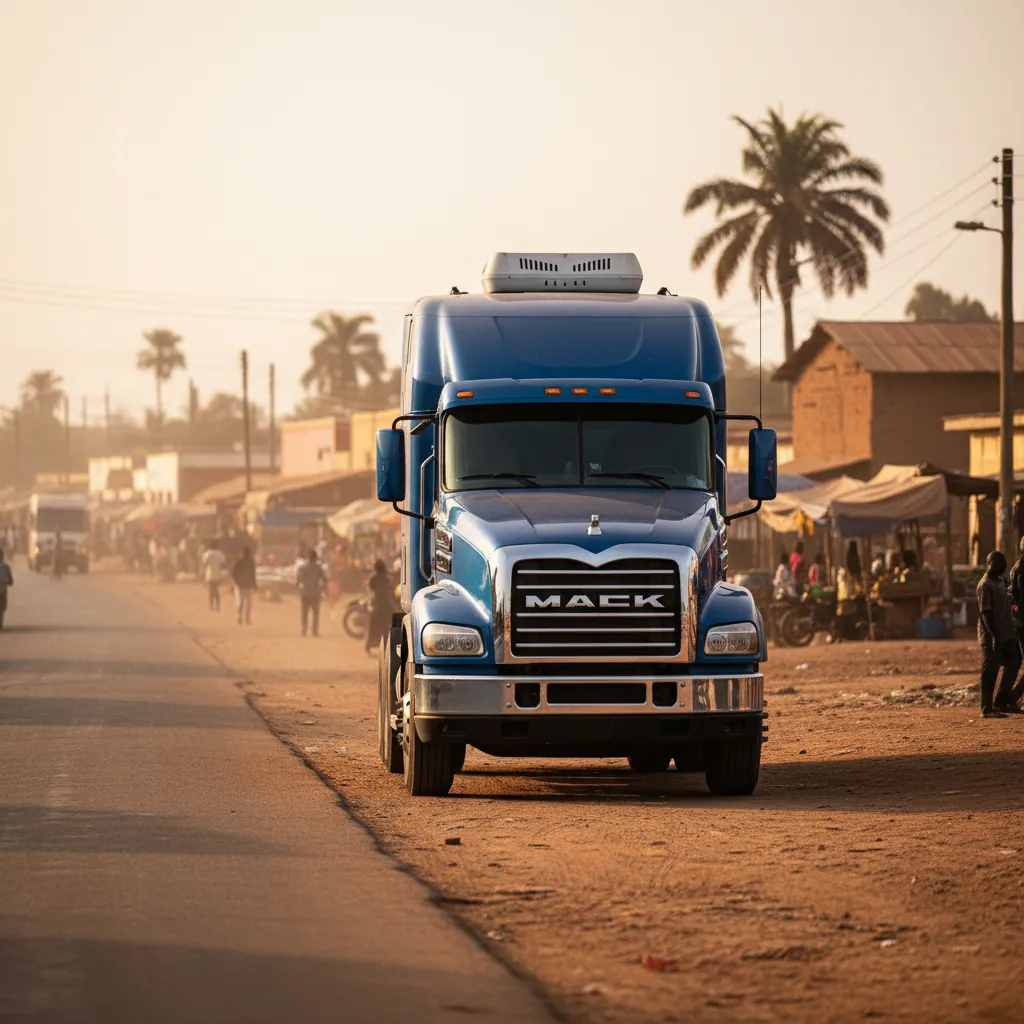
South Africa's freight industry is the backbone of the continent's most industrialized economy, moving over 80% of the nation's goods by road across a network that spans from the subtropical northeast to the Mediterranean climate of the Western Cape. The Johannesburg-Durban corridor, one of the world's busiest freight routes, handles thousands of trucks daily, carrying everything from mining equipment to consumer goods. For the drivers who operate these vehicles—often covering thousands of kilometers weekly across diverse climates—the working conditions can be extreme. The Highveld around Johannesburg may enjoy mild temperatures, but descending to the KwaZulu-Natal coast means entering a humid subtropical zone where temperatures soar. The Karoo and Northern Cape present desert conditions where summer temperatures exceed 40°C. Throughout these variations, one constant remains: drivers need reliable cooling during rest periods to maintain safety and productivity. Parking air conditioning has become the solution that South African fleet operators increasingly rely upon.
The South African trucking industry operates under some of the most developed regulatory frameworks in Africa, with strict hours-of-service regulations enforced by the Road Traffic Management Corporation. These regulations mandate rest periods that drivers must take, whether they have reached a convenient stopping point or not. When a driver must take an 8-hour rest break, the quality of that rest directly impacts their fitness to drive when their break ends. In an uncooled cabin, particularly during South African summers, rest becomes impossible—drivers emerge from their mandated breaks exhausted, dehydrated, and unfit to operate heavy vehicles safely. This creates a Catch-22 situation: regulations require rest, but conditions make rest impossible. Parking air conditioning breaks this deadlock by creating a comfortable environment where drivers can actually recover during their off-duty hours.
South Africa's diverse geography means that a single long-haul trip can traverse multiple climate zones. A truck departing Johannesburg for Cape Town descends from the Highveld's 1,700-meter elevation to sea level, crossing the Karoo desert where summer temperatures regularly exceed 40°C and winter nights can drop below freezing. The Garden Route offers coastal moderation, while the Eastern Cape presents its own microclimates. A driver making this journey needs cooling that works in all these conditions—combating desert heat one day and potentially providing heating the next. Modern parking air conditioners like the CoolDrivePro VS02 PRO handle this range with ease, providing powerful cooling when needed while operating efficiently enough to preserve battery life in all conditions.
The economic case for parking air conditioning in South African freight operations is compelling. With diesel prices fluctuating around 20 Rand per liter and a typical long-haul truck consuming 40-50 liters per 100 kilometers, fuel represents the largest operational cost for most fleets. Eliminating the fuel consumption from idling during rest breaks—typically 3-4 liters per hour—generates immediate savings. For a truck operating six days per week with mandated daily rest periods, this translates to annual fuel savings that typically recover the investment in parking AC equipment within 12-18 months. Beyond fuel, there are savings from reduced engine wear, lower maintenance costs, and improved vehicle resale values. When driver welfare benefits are added to the calculation, the return on investment becomes even more attractive.
Driver welfare has become an increasingly important focus in South African logistics, driven by both regulatory attention and market forces. The industry has faced criticism for working conditions, and companies are recognizing that attracting and retaining quality drivers requires offering better amenities. Experienced, professional drivers are in short supply and can choose their employers. Companies that offer modern, comfortable vehicles find it easier to recruit and retain these valuable employees. Parking air conditioning has become a visible marker of a company's commitment to driver welfare—prospective drivers notice which fleets offer this amenity, and word spreads quickly in the close-knit trucking community. For fleet operators, the investment in parking AC pays dividends in reduced turnover and a higher caliber of driver.
The CoolDrivePro VS02 PRO has gained significant market share in South Africa due to its appropriate specifications for local conditions. The 9000 BTU cooling capacity handles the extreme heat of the Karoo and Northern Cape, while the unit's 12V/24V compatibility works with the mixed voltage systems found in South African fleets. The robust construction withstands the vibration and occasional poor road surfaces found on some routes, and the unit's efficiency preserves battery life during long rest periods. South African distributors have built strong support networks, ensuring that spare parts and technical assistance are readily available throughout the country—a crucial consideration for operators whose vehicles may break down far from major centers.
Implementation of parking air conditioning in South African fleets requires attention to the country's specific regulatory and operational environment. The National Regulator for Compulsory Specifications (NRCS) sets standards for vehicle equipment, and operators must ensure that installations comply with these requirements. Professional installation is essential not just for performance but also to maintain vehicle warranties and insurance coverage. South African fleet operators are increasingly partnering with certified installers who understand these requirements and can provide documentation proving compliance. This professional approach ensures that investments in parking AC are protected and that systems perform reliably throughout their service life.
Health and safety considerations are particularly prominent in the South African context, where the Occupational Health and Safety Act places clear obligations on employers to provide safe working conditions. Heat stress is recognized as an occupational hazard, and companies that fail to address it face potential liability. Beyond legal compliance, there is a growing recognition that driver health is a business asset—healthy, well-rested drivers are more productive, have fewer accidents, and represent the company more professionally. The investment in parking air conditioning is thus both a risk management strategy and a contribution to operational excellence. Fleet managers who understand this dual benefit are prioritizing parking AC installations.
The competitive landscape of South African logistics is driving continued investment in technology and driver amenities. As the economy has become more sophisticated, clients have raised their expectations for service quality and reliability. Major retailers, manufacturers, and mining companies select logistics providers based on their ability to deliver consistently, and driver welfare is increasingly part of these selection criteria. Companies with modern, comfortable fleets win contracts over competitors with outdated equipment. Parking air conditioning has become a standard expectation for premium logistics services, and companies that fail to offer it are finding themselves relegated to lower-margin, less desirable work.
Looking to the future, South Africa's freight industry appears poised for continued growth and modernization. Infrastructure investments, including road improvements and port expansions, will increase capacity and efficiency. The African Continental Free Trade Area will create new opportunities for cross-border operations. Throughout these developments, the importance of driver welfare will only increase. South African fleet operators who invest in parking air conditioning today are positioning themselves for success in this evolving market, enjoying immediate operational benefits while also preparing for the higher standards that will characterize the industry's future.
Technical Specifications and Performance Metrics
Understanding the technical specifications behind parking air conditioner, parking ac, fleet systems is essential for making informed purchasing and installation decisions. The most important performance metric is the Coefficient of Performance (COP), which measures cooling output per unit of electrical input. High-quality parking AC units achieve COP values between 2.8 and 3.5, meaning they produce 2.8-3.5 watts of cooling for every watt of electricity consumed. CoolDrivePro's advanced dual-rotary compressor technology achieves COP values exceeding 3.2, placing them among the most energy-efficient units on the market.
Cooling capacity is typically expressed in BTU/hr (British Thermal Units per hour) or watts. The relationship is straightforward: 1 ton of cooling = 12,000 BTU/hr = 3,517 watts. Standard truck cab parking ACs range from 5,000 to 10,000 BTU/hr, while RV and larger vehicle systems can reach 15,000 BTU/hr or more. When evaluating specifications, pay attention to the rated conditions—manufacturers should specify performance at standard testing conditions (typically 35°C/95°F outdoor, 27°C/80°F indoor). Performance at extreme conditions (45°C+/113°F+) will be lower, so look for manufacturers who publish high-temperature performance data. Noise levels are another critical specification, measured in dB(A). Premium parking AC units operate at 45-55 dB(A) indoor levels, comparable to a quiet conversation. The compressor type significantly affects noise: rotary compressors are generally quieter than reciprocating (piston) types, and inverter-driven compressors can modulate speed for even lower noise at partial loads.
Energy Efficiency and Battery Optimization
Maximizing the runtime of a parking air conditioner, parking ac, fleet system on battery power requires understanding the energy chain from storage to cooling output. The total energy available depends on battery capacity (Ah), voltage, and usable depth of discharge (DoD). For example, a 24V 200Ah LiFePO4 battery bank stores 4,800 Wh of energy. At 90% usable DoD, this provides 4,320 Wh. If the parking AC consumes an average of 450W (accounting for compressor cycling), this yields approximately 9.6 hours of runtime—sufficient for a full night's rest.
Several strategies can significantly extend battery-powered runtime. Inverter compressor technology allows the AC to modulate capacity rather than cycling on/off at full power, reducing average power consumption by 20-30% compared to fixed-speed compressors. Setting the thermostat to 25-26°C rather than the minimum temperature reduces compressor duty cycle substantially. Pre-cooling the cab while the engine is still running takes advantage of the alternator's charging ability and reduces the initial cooling load on the battery. Insulating the cab—especially the windshield and side windows with reflective sunshades—can reduce heat gain by 40%, directly translating to less AC power needed. Solar panel supplementation (200-400W) can offset 2-4 hours of daytime AC runtime, and during driving, a properly sized DC-DC charger ensures batteries are fully charged before the next rest period. CoolDrivePro's intelligent battery management system (BMS) integration monitors cell voltages in real time and automatically adjusts AC power output to prevent over-discharge, protecting battery health and extending the overall system lifespan.
Comparing Parking AC Technologies: Rooftop, Split, and Back-Wall
Three primary mounting configurations dominate the parking AC market, each with distinct advantages suited to different vehicle types and use cases.
Rooftop (all-in-one) units integrate the compressor, condenser, evaporator, and fans into a single housing mounted on the vehicle roof. Advantages include simpler installation (single mounting point), no interior space consumed, and straightforward maintenance access. The main drawback is increased vehicle height, which can be problematic for clearance-restricted routes. CoolDrivePro's VS02 PRO represents the latest evolution in rooftop design, with a low-profile housing under 220mm tall and advanced noise dampening.
Split-system parking ACs separate the condenser/compressor unit (mounted under the vehicle or on the back wall) from the evaporator unit (mounted inside the cabin). This configuration offers maximum installation flexibility, no roof height increase, and typically quieter indoor operation since the compressor is remote from the cabin. The trade-off is more complex installation requiring refrigerant line connections and two separate mounting points. CoolDrivePro's VX3000SP split system is designed for commercial trucks where roof space is limited or height restrictions apply.
Back-wall mounted units fit on the rear wall of the truck cabin, between the cab and the cargo area. This is an excellent option for vehicles where neither rooftop nor split systems are practical. Installation is moderate in complexity, and the units can be accessed for maintenance without climbing on the roof. However, they do consume some interior cabin space. When choosing between these configurations, consider your vehicle's physical constraints, typical operating routes (bridge clearances), installation capability, and personal preference for noise levels and interior layout.
Frequently Asked Questions
Q: What refrigerant is best for parking air conditioners?
A: Most modern parking AC units use R134a or R32 refrigerant. R32 is increasingly preferred for new designs due to its 67% lower global warming potential (GWP of 675 vs. R410a's 2,088) and higher energy efficiency. R134a remains common in existing units and offers proven reliability. Always use the refrigerant specified by the manufacturer—mixing refrigerants damages the system.
Q: How often should I recharge the refrigerant?
A: A properly installed and sealed system should not need refrigerant recharging for 3-5 years or more. If cooling performance degrades significantly within the first 2 years, suspect a leak rather than normal loss. Have a technician perform a leak test before simply adding refrigerant, as the underlying issue will only worsen over time.
Q: Can I use a parking AC while driving?
A: Yes, most parking AC units can operate while the vehicle is in motion. In fact, running the parking AC while driving allows the alternator to charge the batteries simultaneously, effectively providing free cooling. However, at highway speeds, the vehicle's engine-driven AC may be more efficient. Parking ACs are most valuable during stops, rest breaks, and overnight parking.
Q: What warranty should I expect on a parking AC unit?
A: Quality manufacturers typically offer 1-2 year full warranties covering parts and labor, with extended compressor warranties of 3-5 years. CoolDrivePro provides competitive warranty terms with global support. Always register your product promptly and retain proof of professional installation, as improper installation is a common warranty exclusion.
Q: How does ambient temperature affect parking AC performance?
A: As outdoor temperature rises, cooling capacity decreases and power consumption increases. At 35°C (95°F) outdoor, a unit rated at 10,000 BTU may deliver its full capacity. At 45°C (113°F), the same unit might deliver 7,500-8,500 BTU while drawing 15-20% more power. This is why proper sizing with a margin is important for hot-climate operations.
Cost-Benefit Analysis: Parking AC Investment in South Africa
For fleet operators and independent truck owners in South Africa, understanding the financial case for parking air conditioners is crucial for making informed investment decisions. The total cost of ownership for a quality parking AC system includes the unit purchase price (typically $800-2,500 depending on capacity and features), installation costs ($200-500 for professional installation), battery bank investment ($400-1,500 for LiFePO4 batteries), and ongoing maintenance ($50-150 annually). Against these costs, the savings are substantial and measurable.
Fuel savings represent the largest benefit. A truck idling for 8 hours consumes 6.4-12 liters of diesel. At current South Africa fuel prices, this equates to $8-20 per rest period. Over 250 working days per year, the fuel savings alone total $2,000-5,000 annually per vehicle. For a fleet of 20 trucks, this means $40,000-100,000 in annual fuel savings. Engine maintenance savings add another $500-1,000 per vehicle annually, as reduced idling hours extend oil change intervals by 30-40% and decrease carbon buildup in the combustion chamber. Driver retention savings, while harder to quantify, are equally significant. Recruiting and training a replacement driver in South Africa costs an estimated $2,000-5,000, and better working conditions reduce turnover by 15-25%. Most fleet operators in South Africa report complete return on investment within 8-14 months of parking AC installation.
Future Trends: Parking AC Technology in South Africa
The parking air conditioner market in South Africa is poised for significant growth and technological advancement over the coming years. Several key trends are shaping the future of this industry:
Solar integration is becoming standard rather than optional. Next-generation parking AC systems incorporate built-in solar charge controllers and are designed to work seamlessly with rooftop solar panels rated at 200-600W. In South Africa's abundant sunshine (average 5-7 peak sun hours daily), solar supplementation can provide 30-50% of total cooling energy during daytime rest periods, dramatically extending battery runtime and reducing the required battery bank size.
Smart connectivity is another major trend. IoT-enabled parking AC units allow fleet managers to monitor cooling system performance, energy consumption, and maintenance needs in real time across their entire fleet. This data enables predictive maintenance (replacing components before they fail), energy optimization (identifying units operating below peak efficiency), and compliance reporting (documenting anti-idling adherence for regulatory purposes).
Refrigerant evolution continues as the industry transitions to lower-GWP (Global Warming Potential) options. R32 is replacing R410a in new designs, and future systems may adopt even lower-GWP refrigerants like R290 (propane) as safety standards evolve. For buyers in South Africa, choosing a unit with modern refrigerant ensures longer regulatory compliance and better environmental performance. CoolDrivePro remains at the forefront of these technological advances, continuously developing products that deliver superior performance, efficiency, and connectivity for the African market. For deeper detail, see our battery-powered RV air conditioner guide.