Battery Powered RV Air Conditioner: Complete 2026 Buyer Guide
2026 guide to battery RV AC: 12V/24V DC vs inverter setups, LiFePO4 runtime (220Ah → 9–12 hr), $1,500–$4,200 prices, solar offset math. 7 models compared.
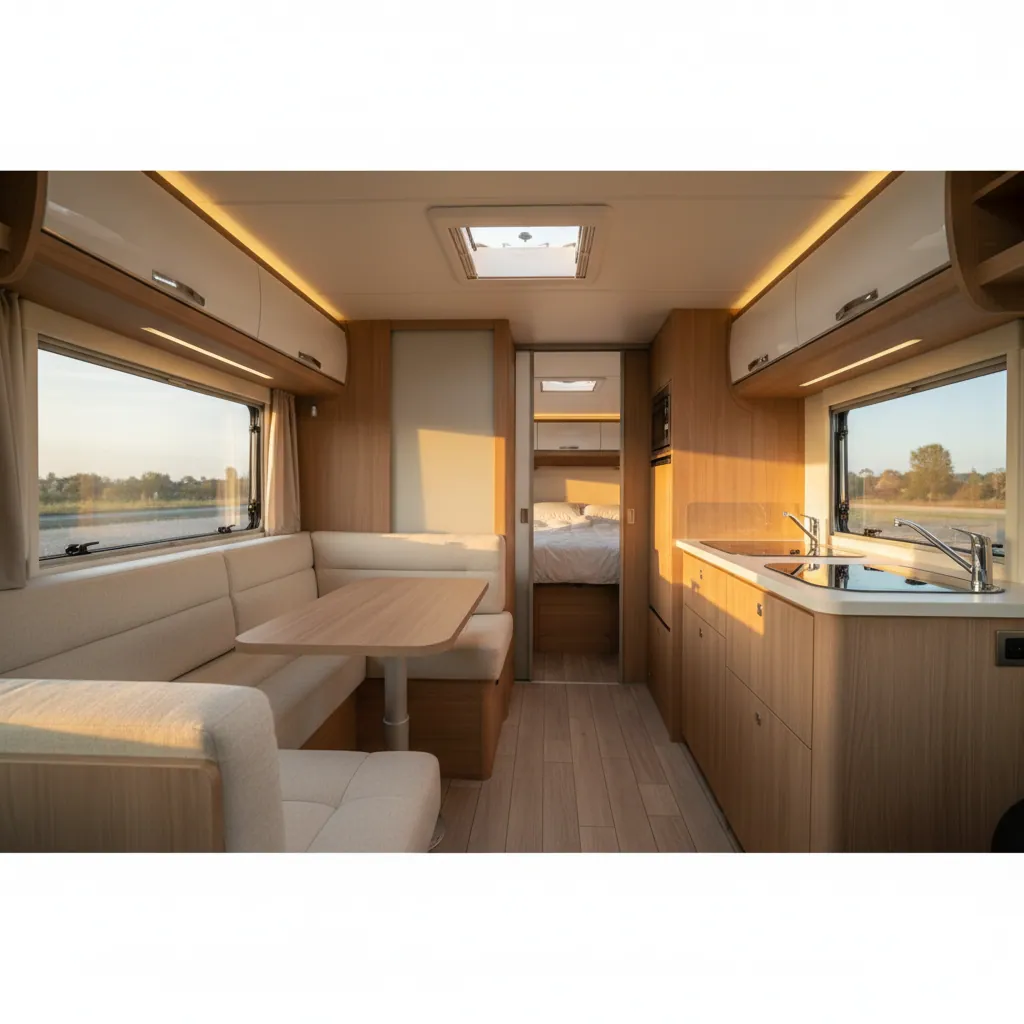
A battery powered RV air conditioner lets you sleep cool overnight without shore power, a generator, or engine idling. The category has matured fast: in 2024 most installs still relied on inverters and AGM batteries; by 2026 the standard build is a native 12V or 24V DC compressor unit paired with LiFePO4 storage. This guide covers every decision you need to make — native DC vs inverter-fed, BTU sizing for the three RV classes, exact battery sizing math (with worked examples for 100Ah, 220Ah, and 400Ah banks), solar offset feasibility, and a 2026 price/spec comparison of seven units that actually exist on the market today. The goal is a build that runs 8 hours overnight on battery alone, recharges via solar within a single sunny day, and costs less than $4,500 installed.
What "Battery Powered" Actually Means in 2026
There are three architectures sold as "battery powered RV AC," and the differences matter for runtime, efficiency, and total install cost.
1. Native DC (12V or 24V). A purpose-built variable-speed compressor draws DC directly from the battery bank. No inverter is needed. Conversion losses are zero. Typical draw at mid-cooling is 35–55 amps at 12V (420–660 W) or 18–28 amps at 24V. This is the architecture used by CoolDrivePro VS02 PRO, Dometic RTX series, Webasto Cool Top RTE, and Indel B Sleeping Well. Best efficiency, best runtime per amp-hour, fewest failure points.
2. Inverter-Fed AC. A residential or RV rooftop AC (Coleman Mach, Dometic Penguin, Furrion Chill) is powered by a 2,000–3,000 W pure sine inverter from a 24V or 48V battery bank. Conversion losses run 8–12%. Inrush current at compressor start can spike to 4,000+ W, requiring an oversized inverter. Workable, but the math is brutal: a 13,500 BTU rooftop RV AC averaging 1,300 W draws ~108 amps at 12V or ~54 amps at 24V *plus inverter overhead*. Same battery bank gets you 30–50% less runtime than native DC.
3. Hybrid Soft-Start RV AC. A traditional rooftop AC fitted with a soft-start kit (Micro-Air EasyStart, SoftStartUSA) so it can run on a 2,000 W inverter from a smaller battery bank. This is a transitional design — real-world data from RV Mobile Internet's 2026 testing showed soft-start setups deliver 5–7 hours of cooling from a 400 Ah lithium bank, vs. 9–12 hours for an equivalent native DC build at the same cooling output.
For 2026, the recommendation is unambiguous for new builds: choose native 12V or 24V DC unless you are retrofitting an existing rooftop unit you cannot replace. The capex difference is ~$300–$700 in the AC unit's favor (DC costs more), but you save $400–$1,200 by skipping a large inverter and 100–200 Ah of battery capacity.
BTU Sizing for RVs: Class A, B, and C
Undersized AC will run continuously and never reach setpoint. Oversized AC short-cycles, wastes amp-hours on inrush, and humidifies the cabin. Use this table as a starting point; adjust ±20% for insulation quality, climate, and number of occupants.
| RV Class | Cabin volume | Recommended BTU | Realistic DC unit |
|---|---|---|---|
| Class B (van) | 250–450 ft³ | 5,000–7,500 | CoolDrivePro VS02 (7,200 BTU) |
| Class B+ / small C | 450–700 ft³ | 7,500–10,000 | Dometic RTX 2000 (8,500 BTU) |
| Class C | 700–1,100 ft³ | 10,000–13,500 | Webasto Cool Top RTE 10 |
| Class A (motorhome) | 1,100–1,800 ft³ | 13,500–18,000 | Two zones recommended |
| Skoolie / converted bus | 800–1,600 ft³ | 10,000–15,000 | Single rear-mount or split |
A 7,200 BTU native DC unit will cool a well-insulated Class B van from 95°F to 72°F in roughly 18–25 minutes and then cycle at 25–40% duty to hold setpoint. A 13,500 BTU unit in a Class C will hold 75°F against 100°F outdoor for 8 hours on roughly 4.2–5.1 kWh of battery energy, depending on insulation and sun exposure.
Class A motorhomes longer than 32 feet usually benefit from two separate zones — one in the bedroom slide-out, one in the main living area — rather than a single oversized rooftop unit. This lets you cool only the space you are sleeping in, which can cut overnight battery draw by 40–60%.
Battery Sizing: The Math That Actually Matters
The number that decides everything is average watts × hours of cooling ÷ usable battery kWh. LiFePO4 is the only chemistry that makes financial sense in 2026 — AGM weighs 3× more for the same usable capacity, deep-cycles fewer than 800 times before degradation, and cannot be safely discharged below 50% state-of-charge.
LiFePO4 usable capacity is ~95% of nameplate (vs. 50% for AGM). A 100 Ah LiFePO4 at 12V delivers ~1,140 Wh usable; a 220 Ah delivers ~2,500 Wh; a 400 Ah delivers ~4,560 Wh.
Worked example 1 — Class B van, 7,200 BTU DC unit, mild night (75°F outdoor, 65°F target): - Average draw: 320 W (low duty cycle, well-insulated) - 8 hours overnight: 320 × 8 = 2,560 Wh - Required battery: 2,560 / 0.95 ≈ 2,700 Wh - Bank: 220 Ah LiFePO4 at 12V (≈ 2,500 Wh usable) is *slightly under-spec*. Either upsize to 280 Ah, or accept that fan-only mode kicks in around 06:30.
Worked example 2 — Class C, 10,000 BTU DC unit, hot night (88°F outdoor, 72°F target): - Average draw: 580 W - 8 hours: 580 × 8 = 4,640 Wh - Required battery: ~4,900 Wh - Bank: 400 Ah LiFePO4 at 12V (≈ 4,560 Wh usable) is borderline. Recommend 460 Ah or step up to 24V architecture (200 Ah at 24V = 4,560 Wh, half the cable size).
Worked example 3 — Class A, 13,500 BTU DC unit, hot night, two zones: - Bedroom zone average: 480 W × 8 h = 3,840 Wh - Living zone runs only at bedtime + early morning: 350 W × 2 h = 700 Wh - Required: 4,540 / 0.95 ≈ 4,800 Wh - Bank: 200 Ah at 24V LiFePO4 = 4,560 Wh usable is borderline; step to 280 Ah at 24V (≈ 6,400 Wh) for comfort margin.
For sizing your own build, see the dedicated LiFePO4 battery sizing guide for parking AC, which walks through cable gauge, fuse sizing, BMS topology, and series-vs-parallel decisions.
Solar Offset: Can You Run Indefinitely Off-Grid?
Yes, but the panel wattage required is higher than most builds anticipate. Rule of thumb for the continental US summer: you need roughly 2 watts of installed solar panel for every 1 Wh of overnight battery use, factoring in real-world derating (panel angle, partial shade, cloud cover, MPPT controller loss).
For the Class B example above (2,560 Wh overnight): need ~5,100 W of solar panel — *not realistic on a Class B roof*. Realistic Class B installs fit 400–600 W of solar, which offsets 200–300 Wh per day net of fridge, lights, water pump, and other loads. That means the AC depletes 2,500 Wh from the bank overnight, and solar replaces 250 Wh during the day. After three cloudy days you are out of capacity.
For the Class C example (4,640 Wh overnight): need ~9,300 W of solar to fully offset. Practical install: 800–1,200 W on a Class C roof. Offset: 400–700 Wh daily after baseline loads.
The honest conclusion: solar extends your off-grid endurance by 1–3 days, but does not make AC runtime free. For week-long boondocking with daily AC use, plan one of three strategies: (a) park in shade and use AC only at peak heat, (b) run a generator 1–2 hours per day to top up the bank, or (c) plug into shore power every 3–4 days. The exception is parking in a high-altitude desert (Sedona, Bishop, Bend) where overnight temps drop below 65°F and AC isn't needed at night — there, 800 W of solar runs your daytime cooling indefinitely on a Class B.
2026 Native DC Unit Comparison: 7 Models That Exist
Specifications below are taken from manufacturer datasheets verified in March 2026. Prices are MSRP excluding install (which typically adds $400–$900 for shop labor on a clean roof, more for a Class A with structural reinforcement).
| Model | BTU | Voltage | Avg draw | Noise dB @ 3 ft | Weight | MSRP USD |
|---|---|---|---|---|---|---|
| CoolDrivePro VS02 PRO | 7,200 | 12V | 38 A (456 W) | 48 | 62 lb | $1,750 |
| CoolDrivePro VX3000SP (split) | 9,500 | 12V/24V | 42 A @ 12V / 21 A @ 24V | 44 | 71 lb | $2,395 |
| Dometic RTX 2000 | 6,800 | 24V only | 22 A (528 W) | 49 | 75 lb | $3,295 |
| Webasto Cool Top RTE 10 | 9,800 | 24V | 28 A (672 W) | 52 | 87 lb | $3,750 |
| Indel B Sleeping Well Oblo | 7,500 | 12V/24V | 36 A @ 12V | 51 | 68 lb | $2,890 |
| Carrier AirV (DC variant) | 11,000 | 24V | 34 A (816 W) | 55 | 92 lb | $3,150 |
| RigMaster T-4000 | 8,500 | 24V | 26 A (624 W) | 53 | 81 lb | $3,490 |
Best for Class B vans: CoolDrivePro VS02 PRO ($1,750). Lowest weight, lowest noise, lowest price, native 12V — no need to convert your existing 12V house bank to 24V.
Best for Class C / small motorhome: CoolDrivePro VX3000SP split ($2,395). The split-system architecture lets you mount the condenser low (under-bed or in a bay), preserving roof space for solar. Quietest unit in the comparison.
Best for Class A / Skoolie: Webasto Cool Top RTE 10 or Dometic RTX 2000 in zoned configuration. Both have established service networks, which matters when you need warranty work in rural Wyoming.
Best for budget builds under $1,800: CoolDrivePro VS02 PRO is currently the only sub-$2,000 native DC unit with BTU output above 6,000 and a 3-year warranty. The market segment between $1,500–$2,500 had four entrants in 2024 and consolidated to two by 2026; expect more competition (and lower prices) by 2027 as Chinese OEM brands gain US distribution.
Inverter-Fed Builds: When They Still Make Sense
Despite the efficiency penalty, three scenarios still favor an inverter-fed rooftop AC build:
Scenario A: You bought an RV with an existing 13,500 BTU rooftop AC and the unit works fine. Replacing a working AC costs $1,500–$3,500 plus the labor to repair the roof cutout to a different size. Adding a soft-start kit ($350) and a 3,000 W inverter ($600) is cheaper. Accept that runtime will be 30–50% shorter on the same battery bank.
Scenario B: You need 14,000+ BTU and your roof can only fit one unit. Native DC currently tops out at ~12,000 BTU per unit (the Carrier AirV DC). For a 36-foot Class A in Phoenix, a single 15,000 BTU residential rooftop on inverter may be your only option short of ducted split systems.
Scenario C: You already have a 48V battery bank for an EV-style setup. Some Sprinter conversions and skoolies run 48V systems for compatibility with off-the-shelf solar inverter components and cheaper EV battery modules. At 48V, inverter overhead is proportionally smaller (~5–7% loss vs 8–12% at 12V), and a 48V → 120V inverter is cheap and reliable.
If one of those describes your build, expect a usable life of 4–7 hours of cooling per night from a 4,800 Wh (400 Ah at 12V or 200 Ah at 24V) lithium bank, with soft-start. Budget another 100 Ah of capacity if you want to also run a 12V fridge, lights, and a CPAP simultaneously.
Installation Difficulty and Cost
Native DC rooftop install on a Class