Why DC Powered Air Conditioners Are a Game-Changer for RV Owners
Discover why DC powered air conditioners are transforming RV and truck cooling. Learn about efficiency, battery compatibility, and the best 12V DC parking AC options…
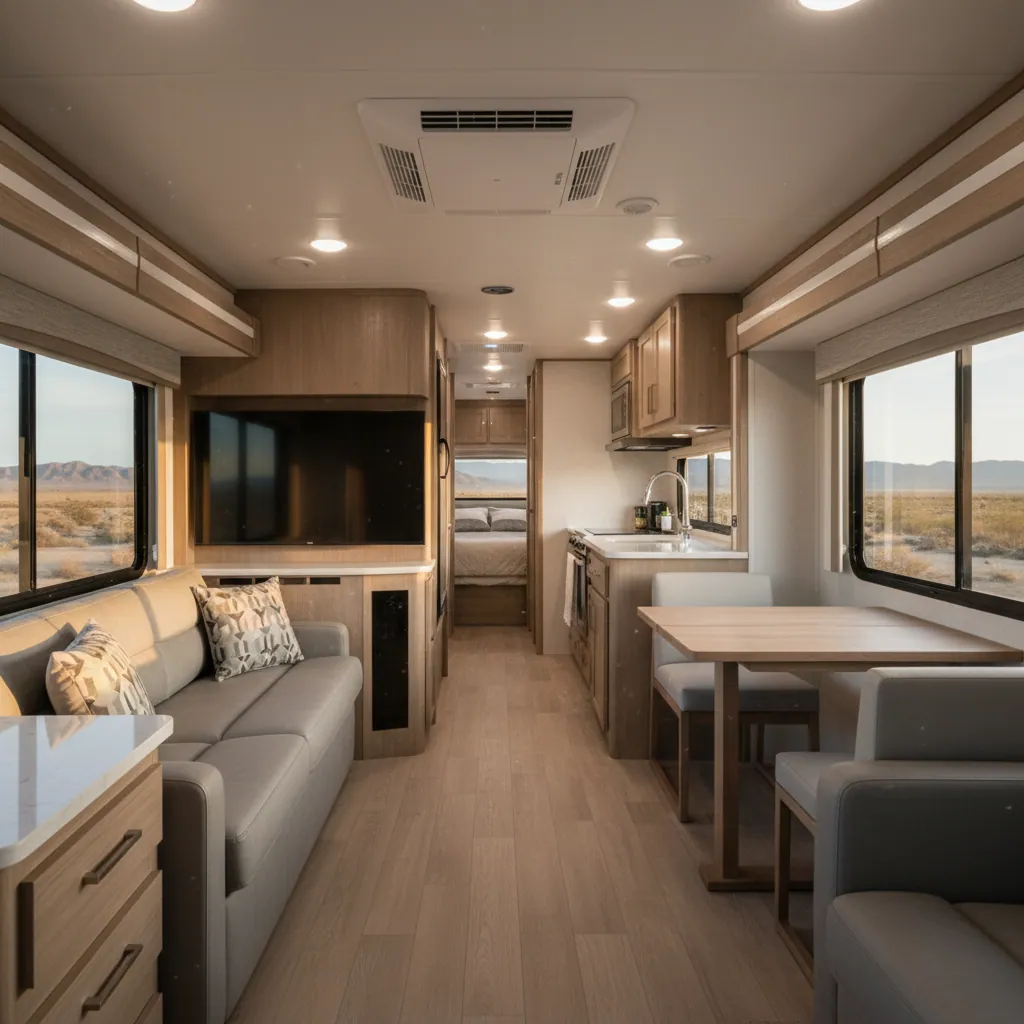
For decades, RV owners had one option for air conditioning: a 110V AC unit that required shore power or a generator. DC powered parking air conditioners have fundamentally changed this equation, enabling truly off-grid comfort for the first time. These innovative cooling systems run directly from your vehicle's 12V or 24V battery, eliminating the need for generators, shore power hookups, or engine idling. The result is quieter camping, lower operating costs, and the freedom to park anywhere — from remote wilderness areas to urban rest stops — without sacrificing comfort.
AC vs. DC: Understanding the Core Difference
Traditional RV air conditioners run on 110V alternating current (AC), requiring either shore power hookup or a generator producing at least 2,000 watts. DC parking air conditioners run directly on 12V or 24V direct current (DC) from your vehicle battery — the same power source that runs your lights, refrigerator, and electronics.\n\nThis fundamental difference has profound implications for how and where you can use your air conditioner. A traditional 110V RV AC requires you to either pay campground hookup fees ($30–60 per night), run a generator (consuming 0.5–1 gallon of fuel per hour and producing significant noise), or idle your truck engine (consuming 0.8–1.2 gallons of diesel per hour). A DC parking AC eliminates all three requirements.\n\nThe conversion efficiency difference is also significant. When you run a generator to power a 110V AC unit, you lose energy at every conversion step: fuel to mechanical energy (generator), mechanical to electrical (alternator), electrical to cooling (compressor). A DC parking AC eliminates two of these conversion steps, running directly from stored battery energy to cooling with a single, highly efficient conversion.
The Efficiency Advantage of DC Compressors
DC scroll and rotary compressors are inherently more efficient than the AC induction compressors used in traditional RV units. A 12V DC parking AC achieves a Coefficient of Performance (COP) of 2.5 or higher — meaning for every 1 watt of electricity consumed, it moves 2.5 watts of heat out of your space. This efficiency is why DC parking ACs can run for 8+ hours on a single battery charge.\n\nThe CoolDrivePro VS02 PRO uses a dual rotary compressor — the most efficient compressor technology available for parking AC applications. Dual rotary compressors have two compression chambers operating 180° out of phase, which reduces vibration, improves efficiency, and extends compressor life compared to single-rotary designs.\n\nVariable-speed operation is another key efficiency advantage. Unlike traditional AC units that run at fixed speed (on/off cycling), DC parking ACs with inverter-driven compressors continuously adjust their speed to match cooling demand. At lower ambient temperatures or when the space is nearly at target temperature, the compressor slows down and consumes less power. This variable-speed operation reduces average power consumption by 20–30% compared to fixed-speed units.
No Generator Noise: The Camping Experience Difference
One of the most appreciated benefits of DC parking air conditioners is silence. Without a generator running, you can enjoy peaceful camping in quiet campgrounds, residential neighborhoods, and national parks where generator use is restricted or prohibited.\n\nThe noise difference is dramatic. A typical portable generator produces 65–75 dB of noise — roughly equivalent to a vacuum cleaner running continuously. The CoolDrivePro VS02 PRO parking AC operates at just 45 dB — quieter than a normal conversation. This difference transforms the camping experience, allowing you to hear birds, wind, and the natural sounds of your surroundings rather than engine noise.\n\nFor truck drivers parked at rest areas and truck stops, the noise reduction is equally important. Many rest areas have quiet hours policies, and engine idling is increasingly restricted. A DC parking AC allows drivers to sleep in genuine quiet, improving sleep quality and safety on subsequent driving shifts.
Anti-Idling Compliance and Legal Requirements
Over 30 US states now have anti-idling laws that restrict truck engine idling to 3–5 minutes. These laws are enforced with fines ranging from $100 to $25,000 for repeat violations. DC parking air conditioners provide the cooling truck drivers need during mandatory 10-hour rest periods without violating these regulations.\n\nThe most restrictive anti-idling laws are in California, where the Air Resources Board prohibits diesel engine idling for more than 5 minutes at any location. New York, New Jersey, Texas, and many other states have similar restrictions. For long-haul truckers who regularly operate in multiple states, a parking AC is increasingly not just a comfort item but a legal necessity.\n\nBeyond legal compliance, anti-idling initiatives offer financial incentives. Many states and municipalities offer rebates for parking AC purchases as part of clean air programs. The EPA's SmartWay program recognizes parking AC use as a fuel efficiency improvement measure. Check with your state's department of transportation for available incentives.
Battery Compatibility and Runtime
DC parking air conditioners are compatible with all standard 12V and 24V battery types, including AGM, gel, and lithium iron phosphate (LiFePO4). However, battery type significantly affects runtime and overall system performance.\n\nWith a 200Ah LiFePO4 battery bank, the VS02 PRO 12,000 BTU parking AC provides 8–10 hours of cooling — enough for a full 10-hour rest period. With 200Ah of AGM batteries (which have only 50% usable capacity), runtime drops to 4–5 hours. This is why LiFePO4 batteries are strongly recommended for parking AC applications.\n\nFor truck drivers with existing 12V starting batteries, a dedicated auxiliary battery bank is essential. Never draw parking AC power from your starting batteries — deep discharge can damage them and leave you unable to start your engine. Install a battery isolator or DC-DC charger to maintain separation between starting and auxiliary batteries while allowing the alternator to charge both banks.
Installation Simplicity Compared to Generator Systems
Installing a DC parking air conditioner is significantly simpler than setting up a generator system. A rooftop DC parking AC requires only a roof penetration for the unit itself and a single power cable run to your battery bank. The entire installation can typically be completed in 4–6 hours by a competent DIYer.\n\nBy contrast, a generator installation requires mounting the generator (often in a dedicated compartment), running fuel lines from the main tank, installing an exhaust system, running 110V wiring throughout the vehicle, and installing a transfer switch. This complexity means generator installations typically require professional help and cost $1,500–3,000 in labor alone.\n\nThe CoolDrivePro VS02 PRO comes with a complete installation kit including roof mounting hardware, butyl tape sealant, power cable with inline fuse, and detailed installation instructions. Most customers complete the installation in a single afternoon.
Frequently Asked Questions About DC Parking ACs
Can a DC parking AC run while driving? Yes, most DC parking ACs can operate while the vehicle is in motion. The alternator charges the battery bank while driving, maintaining adequate power for the AC. This is particularly useful for keeping pets comfortable in the vehicle while making rest stops.\n\nWhat happens if my battery runs low while the AC is running? All quality DC parking ACs include low-voltage protection that automatically shuts down the unit before battery voltage drops to a level that could damage the battery or prevent engine starting. The CoolDrivePro VS02 PRO shuts down at 10.5V (12V systems) or 21V (24V systems).\n\nCan I use a DC parking AC in a residential setting? While DC parking ACs are designed for vehicle use, they can be used in off-grid cabins, tiny homes, and other applications with appropriate 12V or 24V power systems. The efficiency advantages make them attractive for any battery-powered application.\n\nHow long does a DC parking AC last? With proper maintenance, a quality DC parking AC should last 8–12 years. The sealed refrigerant system requires no maintenance, and the main wear items are the air filters (clean monthly) and the compressor (designed for 50,000+ hours of operation).

The Future of RV and Truck Cooling
As lithium battery costs continue to fall and solar panel efficiency improves, DC parking air conditioners are becoming the standard for new RV builds and van conversions. The combination of solar panels, lithium batteries, and a 12V parking AC represents the most sustainable and cost-effective cooling solution available today.\n\nThe technology continues to advance rapidly. Next-generation DC parking ACs with improved compressor efficiency, smarter power management, and better integration with solar and battery monitoring systems are already in development. The trend is clear: DC-powered cooling is the future of mobile comfort.\n\nExplore the CoolDrivePro VS02 PRO 12,000 BTU top-mounted parking AC or the VX3000SP mini split system — both engineered for maximum DC efficiency and designed to work seamlessly with solar and lithium battery systems. Request a fitment-based invoice when you are ready. If you're weighing your options, our detailed breakdown on How to Size Your Battery Bank for a 12V Parking Air Conditioner covers the key decision points worth reviewing before you buy. Readers who found this useful typically also check out the coverage on LiFePO4 Batteries for Parking Air Conditioners: The Ultimate Power Solution, which addresses the complementary side of the equation.
Technical Specifications and Performance Metrics
Understanding the technical specifications behind parking ac, 12v, battery, cooling, dc powered systems is essential for making informed purchasing and installation decisions. The most important performance metric is the Coefficient of Performance (COP), which measures cooling output per unit of electrical input. High-quality parking AC units achieve COP values between 2.8 and 3.5, meaning they produce 2.8-3.5 watts of cooling for every watt of electricity consumed. CoolDrivePro's advanced dual-rotary compressor technology achieves COP values exceeding 3.2, placing them among the most energy-efficient units on the market.
Cooling capacity is typically expressed in BTU/hr (British Thermal Units per hour) or watts. The relationship is straightforward: 1 ton of cooling = 12,000 BTU/hr = 3,517 watts. Standard truck cab parking ACs range from 5,000 to 10,000 BTU/hr, while RV and larger vehicle systems can reach 15,000 BTU/hr or more. When evaluating specifications, pay attention to the rated conditions—manufacturers should specify performance at standard testing conditions (typically 35°C/95°F outdoor, 27°C/80°F indoor). Performance at extreme conditions (45°C+/113°F+) will be lower, so look for manufacturers who publish high-temperature performance data. Noise levels are another critical specification, measured in dB(A). Premium parking AC units operate at 45-55 dB(A) indoor levels, comparable to a quiet conversation. The compressor type significantly affects noise: rotary compressors are generally quieter than reciprocating (piston) types, and inverter-driven compressors can modulate speed for even lower noise at partial loads.
Energy Efficiency and Battery Optimization
Maximizing the runtime of a parking ac, 12v, battery, cooling, dc powered system on battery power requires understanding the energy chain from storage to cooling output. The total energy available depends on battery capacity (Ah), voltage, and usable depth of discharge (DoD). For example, a 24V 200Ah LiFePO4 battery bank stores 4,800 Wh of energy. At 90% usable DoD, this provides 4,320 Wh. If the parking AC consumes an average of 450W (accounting for compressor cycling), this yields approximately 9.6 hours of runtime—sufficient for a full night's rest.
Several strategies can significantly extend battery-powered runtime. Inverter compressor technology allows the AC to modulate capacity rather than cycling on/off at full power, reducing average power consumption by 20-30% compared to fixed-speed compressors. Setting the thermostat to 25-26°C rather than the minimum temperature reduces compressor duty cycle substantially. Pre-cooling the cab while the engine is still running takes advantage of the alternator's charging ability and reduces the initial cooling load on the battery. Insulating the cab—especially the windshield and side windows with reflective sunshades—can reduce heat gain by 40%, directly translating to less AC power needed. Solar panel supplementation (200-400W) can offset 2-4 hours of daytime AC runtime, and during driving, a properly sized DC-DC charger ensures batteries are fully charged before the next rest period. CoolDrivePro's intelligent battery management system (BMS) integration monitors cell voltages in real time and automatically adjusts AC power output to prevent over-discharge, protecting battery health and extending the overall system lifespan.
Comparing Parking AC Technologies: Rooftop, Split, and Back-Wall
Three primary mounting configurations dominate the parking AC market, each with distinct advantages suited to different vehicle types and use cases.
Rooftop (all-in-one) units integrate the compressor, condenser, evaporator, and fans into a single housing mounted on the vehicle roof. Advantages include simpler installation (single mounting point), no interior space consumed, and straightforward maintenance access. The main drawback is increased vehicle height, which can be problematic for clearance-restricted routes. CoolDrivePro's VS02 PRO represents the latest evolution in rooftop design, with a low-profile housing under 220mm tall and advanced noise dampening.
Split-system parking ACs separate the condenser/compressor unit (mounted under the vehicle or on the back wall) from the evaporator unit (mounted inside the cabin). This configuration offers maximum installation flexibility, no roof height increase, and typically quieter indoor operation since the compressor is remote from the cabin. The trade-off is more complex installation requiring refrigerant line connections and two separate mounting points. CoolDrivePro's VX3000SP split system is designed for commercial trucks where roof space is limited or height restrictions apply.
Back-wall mounted units fit on the rear wall of the truck cabin, between the cab and the cargo area. This is an excellent option for vehicles where neither rooftop nor split systems are practical. Installation is moderate in complexity, and the units can be accessed for maintenance without climbing on the roof. However, they do consume some interior cabin space. When choosing between these configurations, consider your vehicle's physical constraints, typical operating routes (bridge clearances), installation capability, and personal preference for noise levels and interior layout.
Frequently Asked Questions
Q: What refrigerant is best for parking air conditioners?
A: Most modern parking AC units use R134a or R32 refrigerant. R32 is increasingly preferred for new designs due to its 67% lower global warming potential (GWP of 675 vs. R410a's 2,088) and higher energy efficiency. R134a remains common in existing units and offers proven reliability. Always use the refrigerant specified by the manufacturer—mixing refrigerants damages the system.
Q: How often should I recharge the refrigerant?
A: A properly installed and sealed system should not need refrigerant recharging for 3-5 years or more. If cooling performance degrades significantly within the first 2 years, suspect a leak rather than normal loss. Have a technician perform a leak test before simply adding refrigerant, as the underlying issue will only worsen over time.
Q: Can I use a parking AC while driving?
A: Yes, most parking AC units can operate while the vehicle is in motion. In fact, running the parking AC while driving allows the alternator to charge the batteries simultaneously, effectively providing free cooling. However, at highway speeds, the vehicle's engine-driven AC may be more efficient. Parking ACs are most valuable during stops, rest breaks, and overnight parking.
Q: What warranty should I expect on a parking AC unit?
A: Quality manufacturers typically offer 1-2 year full warranties covering parts and labor, with extended compressor warranties of 3-5 years. CoolDrivePro provides competitive warranty terms with global support. Always register your product promptly and retain proof of professional installation, as improper installation is a common warranty exclusion.
Q: How does ambient temperature affect parking AC performance?
A: As outdoor temperature rises, cooling capacity decreases and power consumption increases. At 35°C (95°F) outdoor, a unit rated at 10,000 BTU may deliver its full capacity. At 45°C (113°F), the same unit might deliver 7,500-8,500 BTU while drawing 15-20% more power. This is why proper sizing with a margin is important for hot-climate operations.
Understanding Energy Efficiency Ratings and Standards
Energy efficiency is one of the most important factors when evaluating parking air conditioner options, yet it is frequently misunderstood. The primary metric is COP (Coefficient of Performance), which represents the ratio of cooling output to electrical input. A COP of 3.0 means the unit produces 3 watts of cooling for every 1 watt of electricity consumed. Higher COP values indicate better efficiency. Premium parking AC units achieve COP values between 3.0 and 3.5, while budget units may only reach 2.2-2.6. This difference has a dramatic impact on battery runtime: a COP 3.2 unit runs approximately 45% longer than a COP 2.2 unit on the same battery bank.
EER (Energy Efficiency Ratio) is another common metric, expressed in BTU/h per watt. A typical EER for parking AC units ranges from 8 to 12. The relationship between COP and EER is: EER = COP x 3.412. When comparing units from different manufacturers, ensure you are comparing the same metric at the same test conditions. Some manufacturers quote peak efficiency under ideal conditions, while others provide average efficiency across a range of operating conditions. The latter is more useful for real-world performance estimation.
Inverter compressor technology represents the single largest efficiency improvement in modern parking AC design. Unlike fixed-speed compressors that cycle between full power and off, inverter compressors continuously modulate their speed to match the current cooling demand. This eliminates the energy-wasting startup surges (which draw 3-5x normal current), provides more consistent cabin temperature, and reduces mechanical wear on the compressor. CoolDrivePro's inverter-equipped models demonstrate 25-35% lower energy consumption compared to equivalent fixed-speed units, directly translating to proportionally longer battery runtime.
Safety Considerations and Best Practices
Operating a parking air conditioner safely requires attention to several important factors that protect both the vehicle occupants and the equipment. Electrical safety is paramount: all wiring must be sized correctly for the current load with appropriate fuse protection. Undersized wiring is the leading cause of parking AC-related vehicle fires. Always use the wire gauge specified by the manufacturer or larger, and install a fuse or circuit breaker rated at 125% of the unit's maximum current draw within 30 cm of the battery positive terminal.
Battery safety deserves equal attention, particularly with lithium-based batteries. LiFePO4 batteries, while significantly safer than other lithium chemistries, still require a quality BMS (Battery Management System) that provides overcharge, over-discharge, over-current, and thermal protection. Ensure the BMS is rated for the maximum current draw of your parking AC unit. Never mix old and new batteries in a bank, and never mix different chemistries. Store and charge batteries in well-ventilated areas.
Carbon monoxide (CO) safety is a critical advantage of parking ACs over engine idling. Engine idling in enclosed or semi-enclosed spaces (parking garages, loading docks, enclosed rest areas) creates potentially lethal CO accumulation. Parking AC systems produce zero emissions during operation, eliminating this risk entirely. This is particularly important for sleeper cab drivers who rest with windows closed.
Mounting security must be verified regularly, especially on vehicles operating on rough roads. A loose or improperly mounted AC unit can become a projectile in an accident or fall from the vehicle during transit. Check all mounting hardware at least quarterly, retorquing bolts to manufacturer specifications. Replace any hardware showing signs of fatigue cracking or corrosion. For deeper detail, see our LiFePO4 battery sizing for parking AC.