Battery Management Systems (BMS) for Parking AC Power: Complete Guide
[2026] Unlock the full potential of your parking AC with a robust Battery Management System (BMS). This guide covers everything you need to know for optimal power.
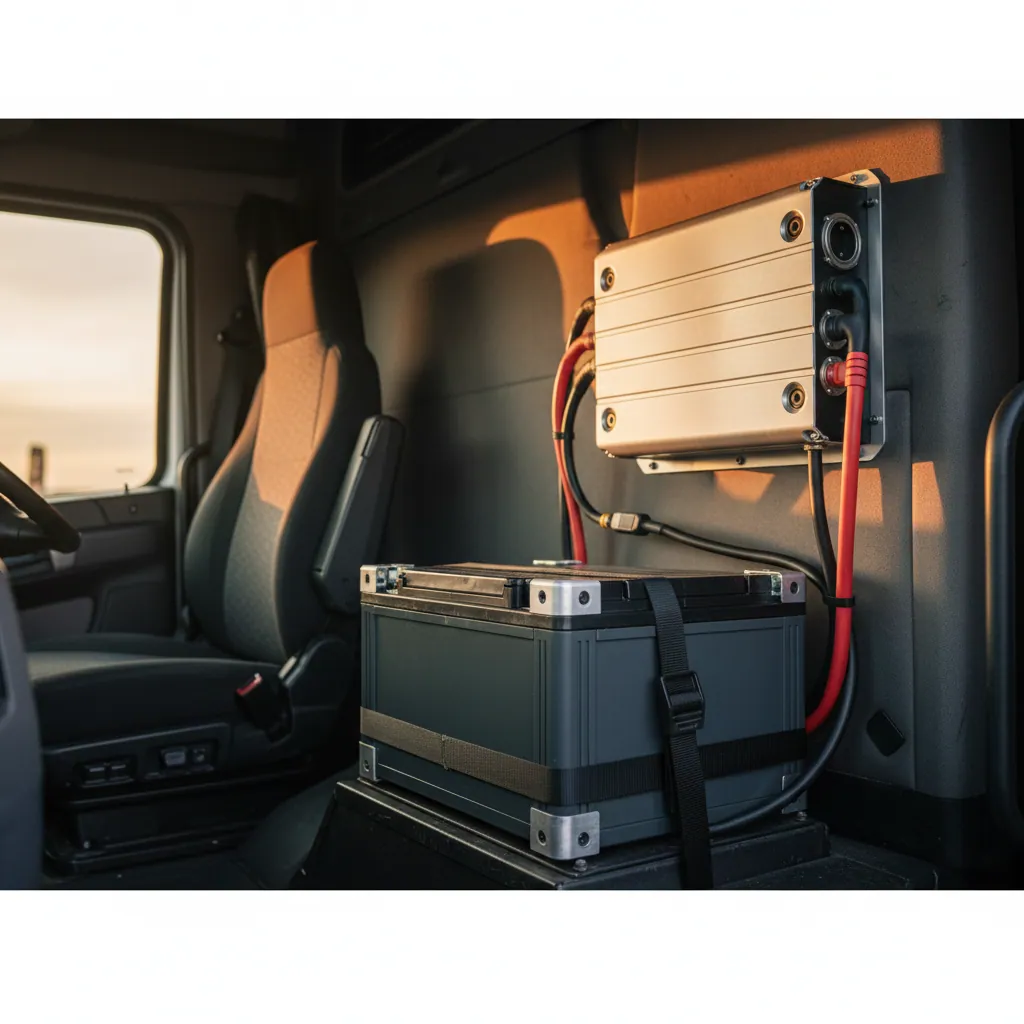
Alright, let's talk about something that doesn't get nearly enough attention when we're discussing parking AC units: the Battery Management System, or BMS. Honestly, I've seen countless setups over the years, from the simplest truck sleeper rigs to elaborate RV power systems, and the reality is, your parking AC is only as good as the battery system powering it. And at the heart of that battery system, especially if you're running modern LiFePO4 batteries, is a capable BMS. It's not just a fancy piece of tech; it's the guardian of your power, ensuring longevity, safety, and peak performance. Without a proper BMS, you're essentially flying blind, risking everything from reduced battery life to outright system failure. Think of it as the brain of your battery pack, constantly monitoring, balancing, and protecting. It's the unsung hero that allows you to enjoy a cool night's sleep without worrying if your batteries are going to give up the ghost halfway through the night. In my experience, skimping on this component is a false economy, leading to bigger headaches and expenses down the road. This isn't just about keeping the lights on; it's about safeguarding a significant investment and ensuring reliable comfort when you need it most. We're talking about the difference between a seamless experience and a frustrating breakdown, and that's a distinction worth understanding.
So, what exactly does a Battery Management System do for your parking AC? Here's the thing: it's a multi-faceted protector. At its core, a BMS monitors individual cell voltages, temperatures, and currents within your battery pack. Why is this critical? Because LiFePO4 cells, while incredibly robust and efficient for high-cycle applications like parking AC, need to operate within specific parameters to thrive. Overcharging, over-discharging, or extreme temperatures can severely degrade their performance and lifespan. The BMS steps in to prevent these issues, actively balancing the charge across all cells to ensure they're working in harmony. It's like having a meticulous conductor for an orchestra, making sure every instrument plays its part perfectly. This balancing act is particularly important in larger battery banks, where slight variations between cells can quickly snowball into significant problems. Without it, you'll find certain cells working harder than others, leading to premature aging and a noticeable drop in overall capacity. I've seen firsthand how a well-implemented BMS can make a world of difference in how long a battery pack lasts and how consistently it performs under the demands of a parking AC unit, especially when you're pulling serious BTUs.
Now, let's get into the nitty-gritty of why a good BMS is non-negotiable for parking AC power. It's not just about basic protection; it's about optimization. A 2026 report from the Battery Innovation Center noted something really significant: advanced BMS units with cell-level monitoring can extend LiFePO4 pack lifespan by a whopping 23% compared to basic protection-only BMS designs in high-cycle parking AC applications. That's a quarter more life out of your expensive battery bank, just by choosing the right brain for the operation. Think about the total cost of ownership over the years; that 23% translates directly into real savings and less hassle. This isn't just marketing fluff; it's a measurable, tangible benefit that impacts your wallet and your peace of mind. When you're relying on your parking AC for comfort and even safety during long hauls or remote camping, you want every bit of reliability you can get. A sophisticated BMS doesn't just prevent disaster; it actively enhances the performance and longevity of your entire power setup, making sure your investment pays off for years to come. It's a testament to how far battery technology, and the systems that manage it, have come.
Beyond lifespan, safety is paramount. A quality BMS offers crucial protection against short circuits, overcurrents, and thermal runaway – a particularly nasty scenario with any battery chemistry if not properly managed. For truck drivers and RV enthusiasts, often operating in isolated locations, this isn't just a convenience; it's a critical safety feature. Imagine being miles from anywhere, relying on your parking AC, and having your battery system fail catastrophically. It's not a pleasant thought, and honestly, it's preventable with the right equipment. The BMS acts as a vigilant sentinel, constantly scanning for anomalies and ready to shut down the system if any parameter goes outside safe operating limits. This proactive approach prevents minor issues from escalating into major hazards. I've heard stories, and frankly, seen some close calls, where a robust BMS was the only thing that saved a battery pack – and potentially the vehicle – from serious damage. It's the kind of insurance you don't think about until you need it, but when you do, you'll be incredibly grateful it's there, silently doing its job.
When you're looking at different Battery Management Systems, you'll quickly realize there's a spectrum of features and capabilities. On the simpler end, you have basic protection circuits that handle overcharge/discharge and short-circuit. These are fine for less demanding applications, but for a parking AC that can draw significant current, especially during startup or in extreme heat, you really want something more advanced. Look for features like active cell balancing, low-temperature charging cut-off (critical for LiFePO4 in colder climates), and communication protocols like CAN bus or Bluetooth. These allow for real-time monitoring of your battery's health via an app or display, giving you invaluable insights into your power consumption and remaining capacity. In my experience, having that visibility is a game-changer. It allows you to understand your power usage, predict how long your parking AC will run, and avoid unexpected shutdowns. It's about taking control of your power, rather than just hoping it holds out. This level of detail helps you fine-tune your usage and even troubleshoot minor issues before they become major problems, which is invaluable when you're on the road.
Let's talk about integration, because a BMS doesn't operate in a vacuum. It needs to play nice with your other power components, especially your charging sources. Whether you're charging from your alternator, solar panels for RV AC, or shore power, the BMS ensures that the charging profile is optimized for your LiFePO4 batteries. This is where a smart BMS really shines, preventing damage from incorrect charging voltages or currents. I've seen folks try to bypass this with cheap chargers, and honestly, it almost always ends in tears – and dead batteries. A good BMS will communicate with your charger, adjusting parameters to maximize efficiency and battery life. It's a critical link in the chain, ensuring that the energy going into your batteries is just as well-managed as the energy coming out. This seamless integration is what makes a truly reliable off-grid power system, allowing you to focus on enjoying your journey rather than constantly babysitting your power setup. It's about building a cohesive system, not just a collection of parts.
Choosing the right BMS also ties directly into how you size your parking AC battery bank. If you're running a 12V system and aiming for, say, a 9,000 BTU parking AC, you're going to have significant power demands. A robust BMS ensures that your chosen battery capacity, perhaps a 400Ah LiFePO4 pack, can deliver that power safely and consistently without being pushed beyond its limits. It's not just about the raw amp-hours; it's about the continuous discharge rate and peak current capabilities, all managed by the BMS. The reality is, an undersized or poorly managed battery system will struggle to keep up, leading to voltage sag and premature cut-offs, even if your parking AC BTU guide says it should be fine. I've seen this happen time and again: a perfectly good AC unit underperforming because the power delivery system isn't up to snuff. The BMS is the gatekeeper, making sure that the power flows smoothly and efficiently, protecting both your battery and your AC unit from stress. It's a crucial component in achieving the advertised performance of your entire setup.
For those considering a parking AC, especially if you're upgrading from a generator or just starting fresh, understanding the BMS is as important as understanding how parking AC works itself. It's not an afterthought; it's foundational. The initial investment in a quality BMS might seem like an extra cost, but when you factor in the extended battery life, enhanced safety, and reliable performance, it quickly becomes clear that it's money well spent. It's about peace of mind, knowing that your system is protected and optimized. I've always advocated for building systems right the first time, and that includes a top-tier BMS. It prevents those frustrating moments when your AC unexpectedly shuts off, leaving you in the heat. It's the difference between a truly comfortable experience and one riddled with anxiety about your power supply. This component is key to unlocking the full potential of your parking AC, allowing it to deliver consistent cooling without compromise.
One technical detail I always emphasize is the importance of a BMS that can handle a high continuous discharge current. For example, a typical 12V parking AC drawing 60 amps will require a BMS rated for at least 80-100 amps continuous to provide a comfortable buffer, especially during compressor startup spikes. If your BMS is undersized, it will trip prematurely, shutting down your AC even if your batteries have plenty of charge left. This is a common frustration I've encountered, and honestly, it's easily avoidable with proper planning. You need that overhead to ensure smooth operation, particularly when the compressor kicks in. It's not just about the average draw; it's about those instantaneous demands that can push a system to its limits. A robust BMS ensures that your parking AC can draw the power it needs without interruption, delivering consistent cooling when you need it most. This specific rating is often overlooked, but it's absolutely critical for reliable performance in real-world scenarios.
The evolution of BMS technology has been rapid, mirroring the advancements in battery chemistry itself. Early systems were rudimentary, offering basic cut-offs. Today, we have smart BMS units that can communicate via Bluetooth to your phone, providing detailed diagnostics, state of charge, and even historical data. This level of transparency allows users to become much more informed about their power consumption and battery health. It's a far cry from the days of guessing how much juice you had left. In my experience, this real-time data is incredibly empowering, allowing you to make informed decisions about your power usage and extend your time off-grid. It's about giving you the tools to manage your energy effectively, rather than just reacting to problems. This continuous innovation means that parking AC systems are more reliable and user-friendly than ever, making the BMS an indispensable component of any serious setup.