Parking AC for Desert Camping: Surviving 120°F Heat in Your RV or Truck
[2026] Survive extreme desert heat with a parking AC for desert camping. Learn how to keep your RV or truck cool at 120°F, using 15,000 BTU units for safety.
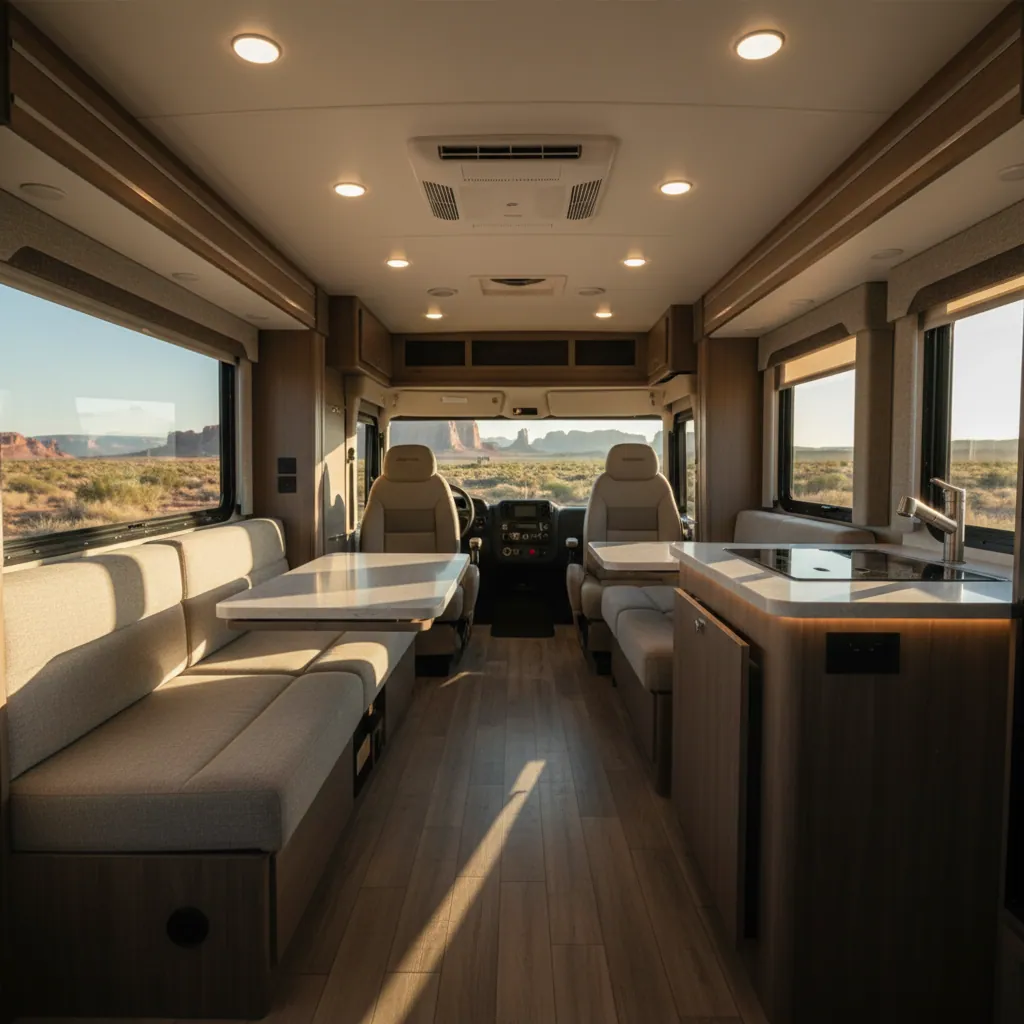
I've seen a lot of folks roll into the Mojave thinking their standard factory setup is going to handle the midday sun, and honestly, it rarely ends well. When you are talking about a parking AC for desert camping, you are not just looking for a slight breeze to take the edge off a warm afternoon. You are looking for a survival tool. I remember a trip out to the badlands where the dashboard thermometer just gave up trying to make sense of the heat. The reality is that standard rooftop units often struggle when the ambient temperature pushes past the century mark, and that is exactly when you need them the most. If you are planning to spend any serious time off-grid in those kinds of environments, you have to rethink your entire approach to climate control. It's not just about comfort; it's about keeping your rig habitable when the sun is actively trying to bake everything inside. I have spent the better part of fifteen years testing different setups in some of the most unforgiving climates imaginable, and I can tell you right now that most people severely underestimate what it takes to keep a metal box cool in the desert. You need a system that is built for the extremes, something that won't tap out when the asphalt starts getting soft, and ideally, one that can maintain a comfortable 70-75°F inside even when it's 120°F outside. This isn't just about luxury; it's about safety and preventing heatstroke in conditions where help might be hours away.
The numbers back this up—the National Weather Service reported in Summer 2026 that Death Valley recorded 129°F ambient temperatures on July 10, with vehicle interior temperatures reaching an astonishing 170°F within 30 minutes of parking in direct sun. That's not just uncomfortable; that's downright dangerous. When I read that report, it didn't surprise me one bit, because I've felt that exact kind of oppressive heat radiating off the walls of a sleeper cab. You can't just crack a window and hope for the best when the air outside feels like a blast furnace. Your cooling system has to work overtime, pulling massive amounts of heat out of a poorly insulated space while fighting the constant thermal load from the sun beating down on the roof. This is where the difference between a cheap knockoff and a properly engineered unit becomes painfully obvious. A lot of the budget options out there might claim they can handle the heat, but in my experience, their compressors start thermal cycling long before you even hit 110°F. They just can't shed the heat fast enough, and suddenly you're sitting in a sauna wondering why you didn't invest in something better. The heat soak into the vehicle's structure is immense, and once it's there, it's incredibly difficult to remove without serious cooling power.
Here's the thing about cooling capacity in these extreme environments: you cannot skimp on the BTUs, and you have to understand how your voltage affects performance. I always tell people that a 12V system might be fine for a mild summer night in the Midwest, but if you're heading into the deep desert, you really ought to be looking at a 24V or even a 48V setup if your battery bank can support it. The higher voltage systems run more efficiently, draw fewer amps for the same cooling output, and generally have more robust compressors that can handle the sustained load. When you're trying to overcome a 120°F ambient temperature, a true 10,000 BTU rating is the absolute bare minimum you should be considering for a standard sleeper cab, and RVs need significantly more, often upwards of 13,500 to 15,000 BTU for larger spaces. I've seen guys try to get by with 5,000 BTU portable units, and it's honestly just sad to watch. The unit runs constantly, never actually brings the temperature down to a comfortable level, and ends up draining the batteries twice as fast because it never cycles off. You need a compressor that can move a serious volume of refrigerant, and you need condenser fans that can push enough air to actually reject that heat into an already boiling atmosphere, which is a significant challenge in itself.
Of course, all that cooling power doesn't mean a thing if you don't have the juice to keep it running, which brings us to the critical issue of power management. I cannot stress enough how important it is to get your parking ac battery sizing right before you head out into the wasteland. You're going to be running that compressor hard, probably for hours on end, and lead-acid batteries simply are not going to cut it. They suffer from severe voltage sag under heavy loads, and their usable capacity drops off a cliff when you pull high amps continuously. That's why I always recommend upgrading to a solid lithium iron phosphate setup. The discharge curve on a good LiFePO4 bank is incredibly flat, meaning your AC unit gets consistent voltage right up until the batteries are nearly dead. This keeps the compressor running efficiently and prevents the low-voltage cutoffs that plague older setups. I've spent nights in the Nevada desert where my AC ran non-stop from sundown to sunrise, and the only reason I woke up comfortable instead of drenched in sweat was because I had a battery bank properly matched to my cooling load, often a 400Ah or larger LiFePO4 system for extended off-grid use. Don't underestimate the power draw of a good AC unit; it's often the single largest electrical load in your vehicle.
But let's be real for a second—you can have the most powerful AC in the world and a massive battery bank, and it won't matter if your rig leaks cold air like a sieve. Thermal management is just as important as the cooling unit itself. I've seen so many people drop thousands of dollars on a top-tier climate control system only to ignore the fact that their windows are basically magnifying glasses for the sun. You have to block that radiant heat before it even gets inside. Reflective window covers are non-negotiable in the desert. I'm talking about the thick, custom-fit ones, not the flimsy silver bubble wrap you buy at the dollar store. You also need to look at your roof insulation and any thermal bridges in your walls. In a truck cab, the firewall and the floor can radiate an unbelievable amount of heat long after the engine is turned off. I always suggest adding a layer of high-quality thermal and acoustic deadening material under the carpets and behind the interior panels. It's a lot of work upfront, but it makes a massive difference in how hard your AC has to work to maintain a livable temperature, effectively reducing the load on your parking AC and extending your battery life.
When you're boondocking out in the middle of nowhere, replenishing that power becomes your next biggest challenge. You can't just idle your engine all day to charge the batteries; that defeats the whole purpose of having a dedicated parking setup, not to mention the wear and tear on your primary motor. This is where a robust solar array becomes your best friend. Figuring out the right solar panels for rv ac use is a bit of a dark art, but the basic rule of thumb is that you need more wattage than you think. The desert sun is intense, which is great for generation, but the heat actually reduces the efficiency of the panels. I've found that over-paneling by about thirty percent is usually the sweet spot to ensure you're pulling enough amps to run the AC during the peak heat of the day while still having a little left over to top up the batteries for the night. It's a delicate balancing act, and you have to monitor your charge controllers closely, but when you get it dialed in, there's nothing quite like the feeling of sitting in a 70-degree cabin while the world outside is literally baking, knowing that the sun is powering the whole operation. A good MPPT charge controller is also crucial to maximize the harvest from your solar panels, especially in fluctuating light conditions.
Another thing that nobody ever talks about until it's too late is the dust. Desert camping means fine, powdery dust that gets into absolutely everything, and your AC unit's condenser is basically a giant vacuum cleaner for it. I've pulled covers off rooftop units after a week in the desert and found the coils completely caked in a layer of concrete-like mud, formed by the mixture of dust and condensation. When those coils get clogged, your system's ability to reject heat plummets, the compressor has to work twice as hard, and your efficiency goes right out the window. You have to be proactive about maintenance when you're in these environments. I make it a habit to blow out the condenser coils with compressed air every few days when I'm out in the dry stuff. It takes ten minutes, but it saves you from a catastrophic failure when you need the cooling the most. Some folks try to rig up custom filters for the exterior intakes, but you have to be really careful with that because restricting the airflow can cause just as many problems as the dust itself. The reality is that you just have to stay on top of the cleaning, and always carry a can of compressed air or a small portable air compressor for this very purpose.
Getting the unit mounted correctly is another area where I see a lot of DIYers run into trouble. The physical stress on a vehicle bouncing down washboard dirt roads is immense, and if your AC isn't secured properly, it's going to tear itself apart or, worse, damage your roof. A proper rv parking ac installation guide will tell you that you need a reinforced mounting frame, especially if you're cutting a new hole or adapting a standard vent opening. I've seen units literally bounce loose because someone used cheap self-tapping screws instead of proper through-bolts and backing plates. You also have to think about the seal. The standard foam gaskets that come with most units are fine for highway driving, but in the desert, the extreme temperature swings can cause that foam to degrade and compress unevenly. I always recommend using a high-quality, UV-resistant sealant in addition to the mechanical fasteners to ensure that neither dust nor the occasional rare desert downpour makes its way into your living space. It's one of those things where doing it right the first time saves you a massive headache down the road, and potentially prevents costly water damage or structural issues.
There's a psychological component to all of this that I think gets overlooked. When you're miles away from civilization and the temperature is climbing past 115°F, knowing that you have a reliable sanctuary changes the entire dynamic of the trip. I've been in situations where the heat was so oppressive that it was hard to think straight, let alone enjoy the scenery or get any work done. Having a space where you can retreat, cool down your core temperature, and actually rest is not a luxury in those conditions; it's a necessity. It allows you to explore during the cooler morning and evening hours and wait out the brutal midday sun in comfort. I honestly believe that a lot of the fatigue and irritability that people experience on long desert trips comes down to poor temperature management. When you can't escape the heat, it wears you down physically and mentally. Investing in a proper cooling setup means you're investing in your own well-being and safety, and that's something you really can't put a price tag on when you're out in the middle of nowhere. The peace of mind alone is worth the investment, knowing you can always retreat to a cool, comfortable environment.
Of course, things do go wrong, and when they do, being prepared can make all the difference. Always carry spare parts for your AC system, including extra fuses, refrigerant, and even a backup compressor if you're heading deep into the desert. The last thing you want is to be stranded in the heat with no way to cool down.