Off-Grid RV Air Conditioning: A Complete Guide to Solar-Powered Cooling
[2026] Complete guide to off-grid RV air conditioning using solar power and 12V parking AC. Learn system sizing, battery selection, and real-world performance tips.
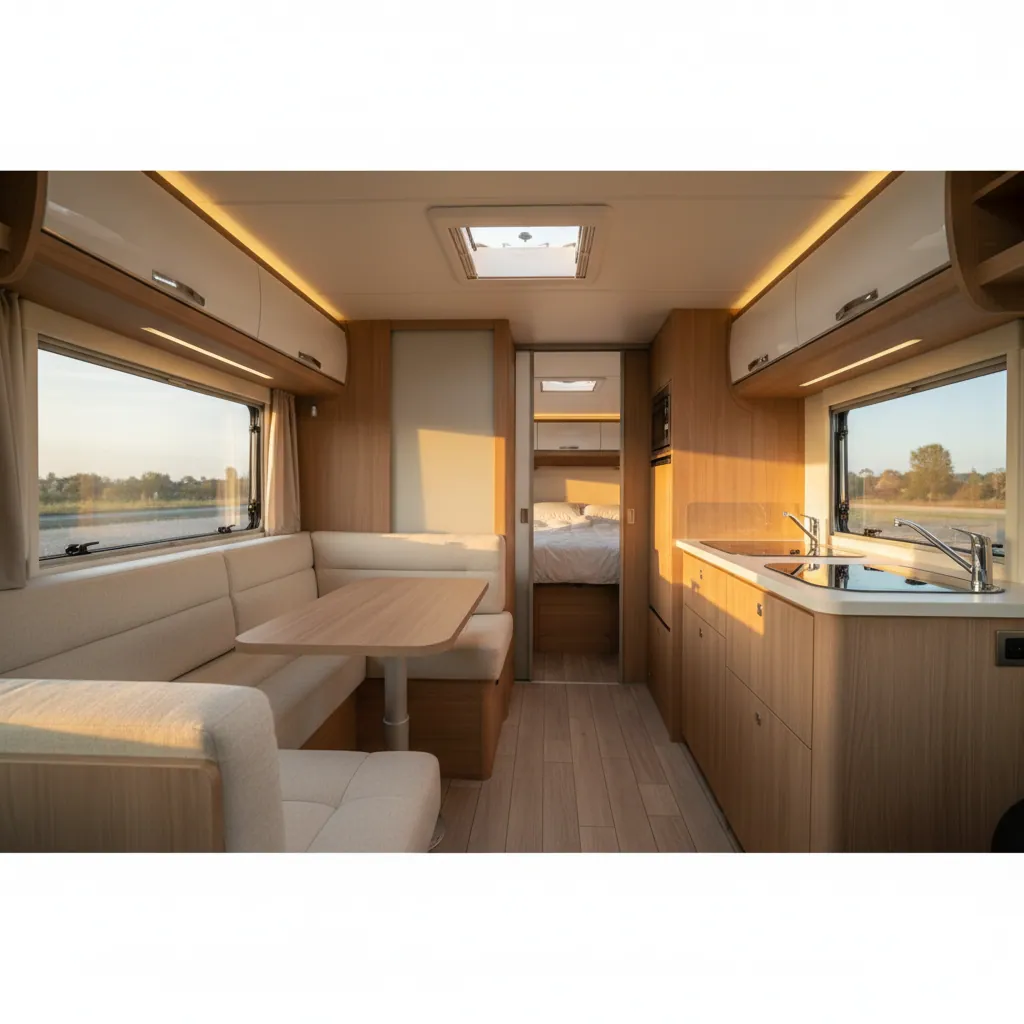
Traveling in an RV offers a unique sense of freedom and adventure, but comfort is key — especially when it comes to maintaining a cool and pleasant environment inside your home on wheels. Traditional RV air conditioners require shore power or a generator, limiting where you can park. A solar-powered parking air conditioner changes everything, enabling truly off-grid cooling that follows the sun wherever you roam. Whether you're boondocking in the desert, camping in a national forest, or simply parked at a trailhead overnight, a 12V DC parking air conditioner powered by solar panels gives you the freedom to stay cool without hookups, generators, or fuel costs.
Why Solar + Parking AC Is the Perfect Combination
A 12V parking air conditioner draws approximately 15–20 amps at peak load during the hottest part of the day. A 400W solar array in full sun generates 25–30 amps — enough to run the parking AC continuously during daylight hours while simultaneously charging your battery bank. This means free cooling whenever the sun is shining.\n\nThe synergy between solar and parking AC goes beyond simple math. Solar generation peaks between 10 AM and 3 PM — exactly when ambient temperatures are highest and cooling demand is greatest. This natural alignment means your solar system is working hardest precisely when your parking air conditioner needs the most power. The result is a self-sustaining cooling system that requires zero fuel and produces zero emissions.\n\nCoolDrivePro's VS02 PRO parking air conditioner is specifically engineered for solar compatibility, featuring a wide voltage input range (10–30V) that accommodates the variable output of solar panels and the discharge curve of lithium batteries. The variable-speed dual rotary compressor automatically adjusts its power consumption based on available solar input, ensuring maximum efficiency across all conditions.
Sizing Your Solar System for Off-Grid AC
For reliable off-grid cooling, we recommend a minimum of 400W of solar panels paired with a 200Ah lithium iron phosphate (LiFePO4) battery bank. This combination provides 6–8 hours of solar-powered cooling during the day, plus 6–8 hours of battery-powered cooling at night — giving you 12–16 hours of total cooling per day.\n\nFor full-time RV living in hot climates, consider scaling up to 600–800W of solar and 300–400Ah of battery capacity. This larger system can maintain comfortable temperatures even on partly cloudy days and provides enough reserve capacity to handle multiple consecutive cloudy days without running out of power.\n\nWhen calculating your solar needs, account for panel orientation and tilt. Flat-mounted panels on an RV roof typically produce 15–20% less than optimally tilted panels due to the angle of incidence. Use a conservative 75% efficiency factor when sizing your system to ensure adequate power in real-world conditions.\n\nPanel selection matters too. Monocrystalline panels offer the highest efficiency (20–22%) in the smallest footprint — ideal for RV roofs where space is limited. A 400W system using 100W monocrystalline panels requires only four panels, fitting comfortably on most Class A and Class C motorhomes.
Choosing the Right Battery for Your Parking AC
Lithium iron phosphate (LiFePO4) batteries are the best choice for parking AC applications, and the difference compared to traditional lead-acid batteries is dramatic. LiFePO4 batteries offer 3,000–5,000 charge cycles versus 300–500 for lead-acid, 95%+ usable depth of discharge versus 50% for AGM, consistent voltage output throughout the discharge cycle, and a 10-year lifespan that makes them far more economical over time.\n\nThe consistent voltage output of LiFePO4 batteries is particularly important for parking AC performance. As lead-acid batteries discharge, their voltage drops significantly — causing the parking AC compressor to work harder and less efficiently. LiFePO4 batteries maintain near-constant voltage until they're nearly depleted, ensuring your parking AC runs at full efficiency throughout the night.\n\nFor a 200Ah LiFePO4 battery bank, budget approximately $800–1,200 for quality cells with a built-in battery management system (BMS). While this is more expensive than equivalent AGM batteries upfront, the 10x longer cycle life makes LiFePO4 the clear winner in total cost of ownership. Many RV owners recoup the premium cost within 2–3 years through reduced battery replacement costs alone.
Solar Charge Controllers: MPPT vs PWM
The solar charge controller is the critical link between your solar panels and battery bank. For parking AC applications, always choose an MPPT (Maximum Power Point Tracking) controller over a PWM (Pulse Width Modulation) controller. MPPT controllers are 20–30% more efficient than PWM, converting more of your solar panel's output into usable battery charge.\n\nFor a 400W solar system charging a 12V battery bank, choose an MPPT controller rated for at least 40 amps. Popular options include the Victron SmartSolar 100/50 and the Renogy Rover Elite 40A. Both offer Bluetooth connectivity for monitoring via smartphone app, which is invaluable for optimizing your system performance.\n\nConnect your MPPT controller directly to the battery bank, not through a fuse block or distribution panel. Use appropriately sized wire (8 AWG minimum for 40A controllers) with ring terminal connections for maximum reliability. Install a fuse within 12 inches of the battery positive terminal to protect against short circuits.
Installation Tips for Maximum Performance
Mount solar panels on the RV roof with at least 2 inches of clearance for airflow beneath the panels. This gap allows air to circulate under the panels, keeping them cooler and improving efficiency by 5–10%. Use stainless steel mounting hardware to prevent corrosion, and apply self-leveling lap sealant around all penetrations to prevent leaks.\n\nRun wiring in UV-resistant conduit or cable management channels to protect from sun exposure and abrasion. Use marine-grade tinned copper wire for all connections — the tin coating prevents oxidation that can increase resistance over time. Label all wires clearly and document your system layout for future troubleshooting.\n\nInstall a battery monitor (such as the Victron BMV-712) to track state of charge, current flow, and historical data. This data is invaluable for understanding your system's performance and identifying any issues before they become problems. Set low-voltage disconnect at 20% state of charge (approximately 12.0V for LiFePO4) to protect battery longevity.
Real-World Performance Data
CoolDrivePro customers report that a 400W solar + 200Ah LiFePO4 + 12,000 BTU parking AC system maintains comfortable temperatures (below 75°F / 24°C) in a 25-foot RV even in 95°F (35°C) ambient temperatures — completely off-grid, with no fuel cost.\n\nIn a real-world test conducted in Arizona in July, a 30-foot Class C motorhome with this exact system maintained 72°F interior temperature with an exterior temperature of 108°F. Solar generation averaged 380W during peak hours, the parking AC consumed an average of 280W, and the battery bank ended each day at 85% state of charge — fully ready for overnight cooling.\n\nFor truck drivers using a 12V parking AC in a sleeper cab, a 200W solar panel on the cab roof combined with a 100Ah LiFePO4 battery provides 8–10 hours of cooling during a 10-hour rest period. This completely eliminates the need for engine idling, saving approximately 0.8–1.2 gallons of diesel per rest period — or $3–5 at current prices.
Frequently Asked Questions About Solar-Powered Parking AC
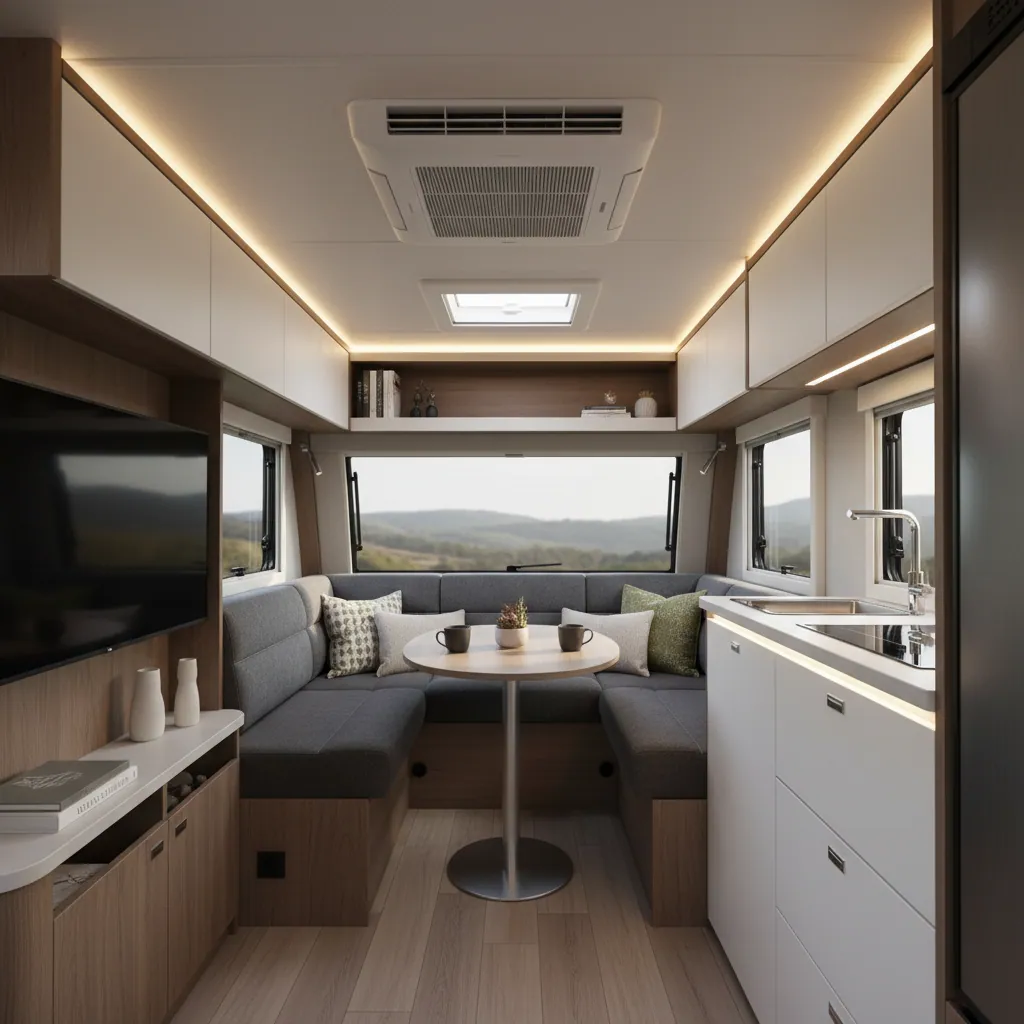
Can I run a parking AC entirely on solar without batteries? Technically yes, during peak sun hours, but batteries are essential for reliable operation. Without batteries, the AC would shut off whenever a cloud passes overhead. A battery bank acts as a buffer, smoothing out solar fluctuations and providing power during cloudy periods and at night.\n\nHow many solar panels do I need for a 12,000 BTU parking AC? For continuous daytime operation, 400W of solar panels is the minimum recommended. For all-day and overnight operation, 600W of solar paired with a 200Ah LiFePO4 battery provides reliable cooling in most climates.\n\nWill my existing RV solar system run a parking AC? It depends on your system size. If you have 400W+ of solar and 200Ah+ of lithium batteries, you likely have enough capacity. If your system is smaller or uses lead-acid batteries, you may need to upgrade before adding a parking AC.\n\nHow long do solar panels last on an RV roof? Quality monocrystalline solar panels carry 25-year power output warranties and typically last 30+ years. The main risk on RV roofs is physical damage from tree branches and hail rather than degradation. Protect panels with a thin layer of UV-resistant coating applied annually.
Conclusion: The Future of Off-Grid RV Comfort
Solar-powered parking air conditioning represents the pinnacle of off-grid RV comfort — free cooling powered by the sun, with zero emissions and zero fuel cost. As solar panel prices continue to fall and battery technology improves, this combination becomes more accessible every year.\n\nThe CoolDrivePro VS02 PRO 12,000 BTU parking air conditioner is engineered specifically for solar and battery integration, with a wide voltage input range, variable-speed compressor, and whisper-quiet 45 dB operation. Paired with a properly sized solar and battery system, it delivers reliable, efficient cooling wherever your adventures take you.\n\nReady to go truly off-grid? Explore the VS02 PRO top-mounted parking AC or the VX3000SP mini split — both designed for maximum solar compatibility and off-grid performance. For a deeper look at the technical side, the guide on Parking Air Conditioner Buying Guide 2025: Everything You Need to Know Before You Buy goes into specifics that most buyers overlook. If you're weighing your options, our detailed breakdown on How Many BTU Do You Need for a Parking Air Conditioner? Complete Sizing Guide covers the key decision points worth reviewing before you buy.
Practical Benefits and Real-World Applications
The practical advantages of integrating a parking air conditioner into your vehicle extend far beyond simple comfort. For the use case described in this article—off-grid rv air conditioning: a complete guide to solar-powered cooling—the benefits are both immediate and long-term. Immediate benefits include maintaining a safe, comfortable temperature in the vehicle cabin without running the engine, eliminating exhaust fumes, reducing noise pollution, and cutting fuel costs dramatically. A typical diesel engine consumes 0.8-1.5 liters per hour at idle solely for air conditioning; a battery-powered parking AC eliminates this entirely.
Long-term benefits include reduced engine wear (idling is particularly harsh on diesel engines, causing carbon buildup and accelerated oil degradation), lower emissions footprint, compliance with increasing anti-idling regulations, and improved resale value of vehicles equipped with modern parking AC systems. For commercial operators, driver satisfaction and retention improve measurably when comfortable rest conditions are provided—industry surveys indicate that quality sleeper cab cooling ranks among the top three factors in driver job satisfaction. From a safety perspective, well-rested drivers in climate-controlled cabins demonstrate significantly better reaction times and decision-making ability, directly contributing to road safety. The investment in a quality parking AC system like CoolDrivePro's range typically pays for itself within 6-12 months through fuel savings alone, making it one of the highest-ROI upgrades available for any vehicle that requires extended stationary periods.
Selecting the Right System for Your Needs
Choosing the optimal parking AC system requires balancing several factors specific to your situation. Start with the physical constraints: measure the available mounting space on your vehicle's roof, back wall, or undercarriage. Rooftop units are the most popular choice for trucks and RVs, offering excellent performance without consuming interior space, but they increase overall vehicle height by 200-300mm. If clearance is a concern, consider a split-system or back-wall mounted unit instead.
Next, determine your cooling load. As a general guide: standard truck cabs (2-3 m³ interior volume) need 5,000-8,000 BTU; sleeper cabs (4-6 m³) need 8,000-12,000 BTU; and RVs/larger spaces (8-15 m³) need 12,000-15,000+ BTU. Insulation quality significantly affects these numbers—a well-insulated vehicle may need 30% less cooling capacity than a poorly insulated one.
Power system planning is equally important. Calculate your required runtime (typically 8-10 hours for overnight use), determine the unit's average power consumption (check manufacturer specs at realistic ambient temperatures, not just ideal conditions), and size your battery bank accordingly. Add a 20% safety margin. For example: a unit drawing 450W average on a 24V system needs approximately 18.75A continuous. Over 10 hours, that requires 187.5Ah of usable capacity, or approximately 210Ah of rated capacity for LiFePO4 batteries (at 90% DoD). If budget allows, adding 200-400W of solar panels provides valuable supplemental charging, especially for vehicles parked during daylight hours. CoolDrivePro offers detailed sizing calculators and technical support to help you specify the right system for your exact application.
Installation, Maintenance, and Troubleshooting Guide
A successful parking AC installation begins with thorough preparation. Gather all necessary tools and materials before starting: mounting hardware, sealant (Sikaflex or equivalent polyurethane for roof penetrations), appropriately rated electrical cable, fuse holder and fuse, cable ties, and the manufacturer's installation manual. Plan the cable routing from the battery to the AC unit, keeping cables away from hot exhaust components and moving parts, and using grommets where cables pass through metal panels.
For maintenance, establish a regular schedule: clean or replace cabin air filters every 2-4 weeks (more frequently in dusty environments), clean condenser coils monthly with compressed air or a soft brush, verify condensate drain flow monthly, check electrical connections quarterly for corrosion or looseness, and arrange annual professional service including refrigerant pressure check and compressor current measurement.
Common troubleshooting scenarios and solutions:
Unit does not start: Check battery voltage (must be above low-voltage cutoff, typically 22V for 24V systems or 11V for 12V systems). Check fuse. Verify control panel settings. Reset the unit by disconnecting power for 30 seconds.
Reduced cooling performance: Clean air filters and condenser coils first—this resolves 70% of cases. Check for airflow obstructions. Verify that all vents are open. If problem persists, check refrigerant charge (requires professional equipment).
Unusual noise: Rattling usually indicates loose mounting hardware—tighten all bolts to spec. Buzzing may indicate a failing fan motor bearing. Clicking at startup is normal (compressor engaging) but continuous clicking suggests a control board issue.
Water leaking inside: The condensate drain is blocked—clear it with compressed air or a thin wire. Check that the drain hose is not kinked or crushed. Ensure the unit is mounted level (slight tilt toward the drain side is acceptable).
Frequently Asked Questions
Q: How loud is a parking air conditioner?
A: Indoor noise levels for quality parking AC units range from 45-58 dB(A), roughly equivalent to a quiet office or gentle rainfall. CoolDrivePro units incorporate advanced sound-dampening compressor mounts and optimized fan blade designs to minimize noise, ensuring comfortable sleep conditions.
Q: Will a parking AC drain my starting batteries?
A: Properly installed systems use a dedicated auxiliary battery bank separate from the starting batteries, or include a low-voltage disconnect that protects starting batteries from being drained below the threshold needed to start the engine. Never connect a parking AC directly to starting batteries without proper isolation.
Q: Can parking ACs also provide heating?
A: Many modern parking AC units include a heat pump function that reverses the refrigeration cycle to provide heating. This is effective in mild cold conditions (down to approximately -5°C/23°F outside temperature). For extreme cold, supplemental electric or diesel heating may be needed. CoolDrivePro's heating-cooling models offer both modes in a single unit.
Q: What is the lifespan of a parking AC unit?
A: With proper installation and regular maintenance, a quality parking AC unit should last 5-10 years or approximately 10,000-20,000 operating hours. The compressor is typically the longest-lasting component, while fan motors and control boards may need replacement after 5-7 years depending on operating conditions and dust exposure.
Q: Is it worth investing in a more expensive unit?
A: Generally yes. Premium units feature more efficient compressors (lower power consumption = longer battery runtime), better build quality (longer lifespan), lower noise levels, and more robust electronics. Over a 5-year lifespan, the fuel savings and reduced maintenance costs of a premium unit typically far exceed the higher purchase price. CoolDrivePro is engineered for professional and commercial use, delivering exceptional value through reliability and efficiency. For deeper detail, see our LiFePO4 battery sizing for parking AC.