Fleet Management with Parking ACs: Monitoring, Maintenance & Cost Control
[2026] Effective fleet management with parking ACs reduces costs by 18-22%. Learn monitoring, maintenance, and ROI strategies for truck AC units.
Fleet management with parking ACs isn't just about keeping drivers cool anymore; it's evolved into a critical component of operational efficiency and cost control for any serious fleet. Honestly, I've seen a lot of changes in this industry over the past fifteen years, and the shift towards integrated parking AC solutions is one of the most impactful. We're talking about more than just comfort here; we're talking about driver retention, fuel savings, and significantly reducing wear and tear on your main engine. The reality is, if you're not actively monitoring and maintaining these units as part of your overall fleet strategy, you're leaving money on the table and potentially facing bigger headaches down the road. It's a game-changer for truck drivers' sleep comfort, which directly impacts safety and productivity. In my experience, neglecting these systems is a false economy, leading to higher costs in the long run due to increased idle time and accelerated engine degradation. This isn't just about compliance; it's about smart business. You'll find that a well-managed parking AC system pays for itself, often quicker than you'd expect, by cutting down on unnecessary idling and extending the life of your primary engine. The upfront investment in a quality unit, especially when considering a robust LiFePO4 battery for parking AC, is quickly offset by the operational savings. Here's the thing: you need to treat these units as integral assets, not just add-ons, because their performance directly correlates with your bottom line and driver satisfaction. It's a holistic approach that considers every aspect of vehicle operation and driver well-being, and understanding the total cost of ownership is a critical piece of that puzzle.
Monitoring these systems effectively is where the rubber meets the road, so to speak. It’s not enough to just install a parking AC and hope for the best. You need data, and you need to know what to do with it. Modern parking AC units, especially those integrated with telematics, offer a treasure trove of information. We’re talking about run times, battery voltage, temperature settings, and even diagnostic codes. This data is gold for fleet managers. It allows you to identify units that are underperforming, drivers who might be misusing the system, or even potential maintenance issues before they become costly breakdowns. The numbers back this up — a 2026 report from Fleet Owner Magazine found that fleets using telematics-integrated APU and parking AC systems reported 18% lower maintenance costs and 22% fewer heat-related breakdowns compared to unmonitored units. That’s not just a statistic; that’s real money saved and real headaches avoided. The reality is, without proper monitoring, you’re flying blind, and in this business, flying blind is a recipe for disaster. It’s about proactive management rather than reactive repairs. This kind of data also helps in understanding the true efficiency of your units, especially when you consider factors like parking AC COP efficiency, allowing for targeted maintenance and optimizing your fleet’s performance for maximum uptime.
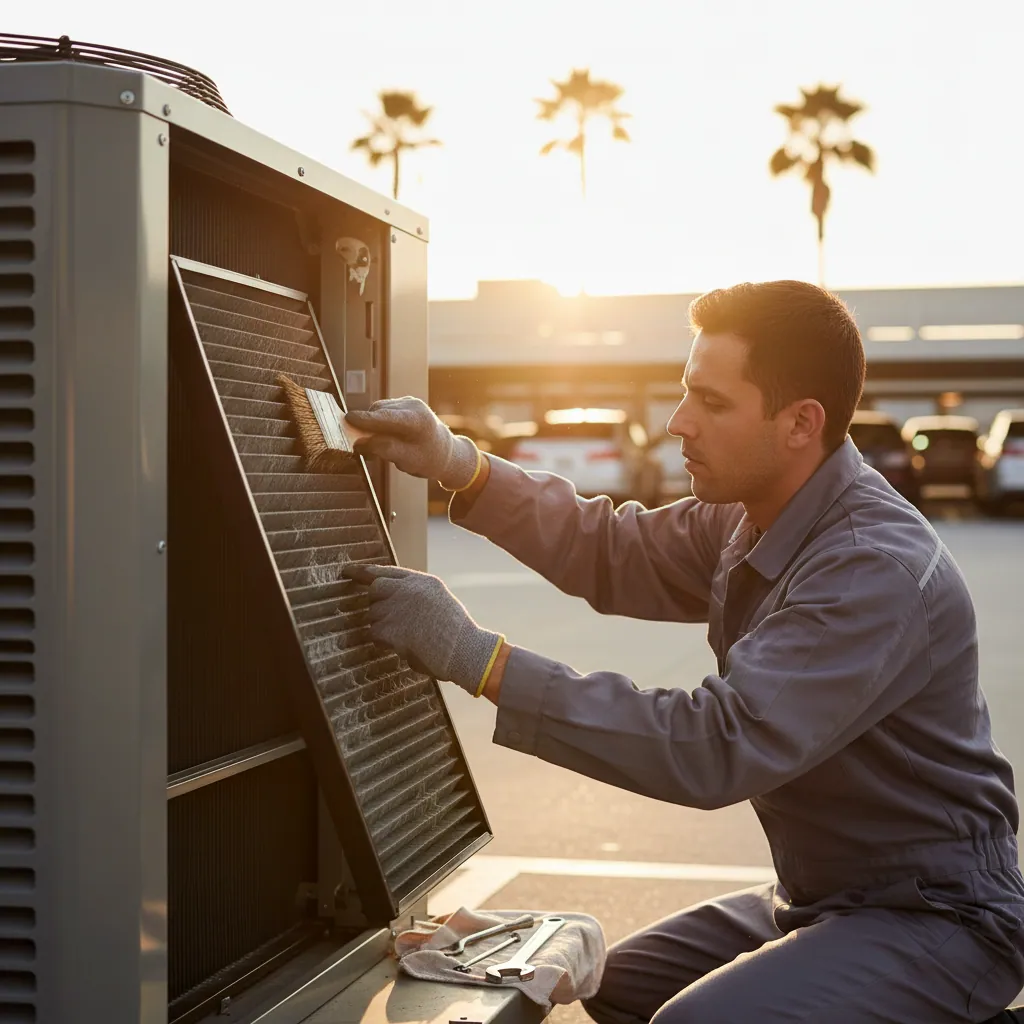
Now, let’s talk maintenance. This is where a lot of fleets drop the ball, honestly. You invest in these sophisticated parking AC systems, but then you treat them like an afterthought when it comes to upkeep. The reality is, proper maintenance isn't just about fixing things when they break; it's about preventing them from breaking in the first place. Regular checks of refrigerant levels, cleaning coils, and inspecting electrical connections are non-negotiable. I’ve seen firsthand how a clogged condenser coil can drastically reduce efficiency, forcing the unit to work harder and draw more power. A simple visual inspection can often catch these issues before they escalate. For instance, maintaining proper airflow is crucial; if your condenser fins are packed with road grime, you’re losing efficiency, plain and simple. A unit designed to deliver 12,000 BTUs might only be putting out 8,000 BTUs if it’s not properly maintained, leading to driver complaints and increased energy consumption. This isn't rocket science, but it requires diligence. You’ll find that a proactive maintenance schedule, perhaps tied into your regular truck service intervals, will save you a fortune in the long run. This is where understanding parking AC troubleshooting comes in handy for your technicians, allowing them to quickly diagnose and resolve common issues, maximizing the return on your investment.
Beyond just keeping drivers comfortable and reducing maintenance, the financial benefits of parking ACs, particularly in terms of fuel savings, are substantial. Honestly, this is where many fleet managers see the most immediate and tangible return on investment. The old way of doing things—idling the main engine for hours to run the cab’s AC—is not only incredibly inefficient but also environmentally irresponsible. A truck engine burning diesel at idle can consume anywhere from 0.8 to 1.5 gallons per hour. Multiply that by hundreds of trucks and thousands of hours, and you’re looking at astronomical fuel costs. Here’s the thing: a well-designed parking AC system, especially one powered by a dedicated battery bank like a LiFePO4 setup, can run for 8-10 hours on a fraction of that energy. We’re talking about pennies per hour compared to dollars. I’ve seen fleets reduce their idle time by 70-80% simply by equipping their trucks with reliable parking ACs. This isn’t just about saving money on fuel; it’s also about significantly cutting down on engine wear and tear. Every hour an engine idles is an hour closer to its next overhaul. The environmental impact is also a huge factor, and a parking AC fuel savings calculator can make the business case crystal clear.
When it comes to choosing the right parking AC for your fleet, it’s not a one-size-fits-all situation. Honestly, I’ve seen fleets make costly mistakes by not doing their homework here. There are primarily two types: compressor-driven and evaporative. Compressor-driven units are the most common and effective, especially in humid climates. Evaporative coolers, on the other hand, use water and are more suited for dry climates, offering a less intense cooling effect but with lower power consumption. The reality is, the choice depends heavily on your operational environment. You’ll also encounter different mounting options: rooftop, back-of-cab, and even integrated systems. Each has its pros and cons regarding installation complexity and aerodynamic impact. Here’s the thing: understanding the nuances of each type is crucial. This is where a comprehensive parking AC buying guide becomes invaluable. You need to consider the size of the cab, typical ambient temperatures, and desired run time. And don’t forget about the BTU rating; it’s not just a number. A unit with insufficient BTUs will struggle to cool the cab effectively, leading to driver discomfort and wasted energy. A parking AC BTU guide can really help you match the unit to the specific requirements of your fleet, preventing costly under- or over-sizing.
Speaking of power, the battery system powering your parking AC is just as critical as the unit itself, if not more so. Honestly, a great parking AC is useless without a robust and reliable power source. In my experience, this is another area where fleets often try to cut corners, only to regret it later. Traditional lead-acid batteries, while cheaper upfront, simply don't have the cycle life or the consistent power delivery needed for prolonged AC operation. Here’s the thing: you need to think about parking AC battery sizing carefully. It’s about matching the battery capacity to the power demands of your AC unit and the desired run time. The reality is, under-sizing your battery bank will lead to premature battery failure and frustrated drivers. This is where LiFePO4 battery parking AC solutions have emerged as a game-changer. Lithium Iron Phosphate batteries offer significantly longer cycle life, lighter weight, and a much more stable voltage output. While the initial investment in LiFePO4 might be higher, the total cost of ownership is often lower due to their extended lifespan and superior performance. I’ve seen fleets switch to LiFePO4 and immediately notice a difference in reliability and driver satisfaction. It’s about ensuring consistent power delivery, which translates directly to consistent comfort and fewer service calls.
Let’s be honest, for any fleet manager, the bottom line is always a major consideration. And when it comes to parking ACs, the Return on Investment (ROI) and total cost of ownership are incredibly compelling. I’ve seen too many operations focus solely on the upfront purchase price, missing the bigger picture entirely. The reality is, a cheaper unit that constantly breaks down, drains batteries, or fails to cool effectively isn’t cheap at all in the long run. You’ll find that the true cost encompasses not just the initial outlay, but also installation, maintenance, fuel savings, driver retention, and even the extended life of your primary engine. Here’s the thing: when you factor in the significant reduction in idle time, the associated fuel savings alone can pay for a quality parking AC system within a year or two. Then there’s the reduced wear and tear on your main engine, pushing back costly overhauls. This is where understanding parking AC ROI and total cost of ownership becomes crucial, allowing you to make data-driven decisions that benefit your fleet for years to come. It’s about looking beyond the sticker price and evaluating the long-term financial and operational advantages. The cumulative effect of these savings and benefits creates a powerful argument for integrating these systems into every vehicle in your fleet.
Beyond the pure economics, there’s a human element to fleet management with parking ACs that often gets underestimated: driver comfort and its direct impact on retention and safety. Honestly, in my fifteen years in this industry, I’ve seen firsthand how a well-rested driver is a safer, more productive, and happier driver. The reality is, the trucking industry faces a persistent driver shortage, and anything you can do to improve their quality of life on the road is a huge win. Being able to get a good night’s sleep in a cool, quiet cab, especially during those sweltering summer nights, is not a luxury; it’s a necessity. I’ve heard countless stories from drivers who say that a reliable parking AC is one of the biggest perks their company offers. It directly contributes to truck driver sleep comfort, which, let’s be honest, is paramount. A driver who’s constantly battling heat and humidity in their sleeper berth is going to be fatigued, irritable, and more prone to accidents. You’ll find that investing in these systems isn’t just about compliance or fuel savings; it’s about investing in your most valuable asset: your people. The cost of recruiting and training a new driver far outweighs the investment in a quality parking AC system. Happy drivers stay with your fleet longer, reducing turnover and associated costs.
The evolut