Heavy-Duty Parking Air Conditioners for Morocco's Desert Routes
Heavy-duty parking air conditioners engineered for Morocco's demanding desert routes. Reliable cooling solutions for trucks traversing the Sahara in 2026, ensuring safety & efficiency.
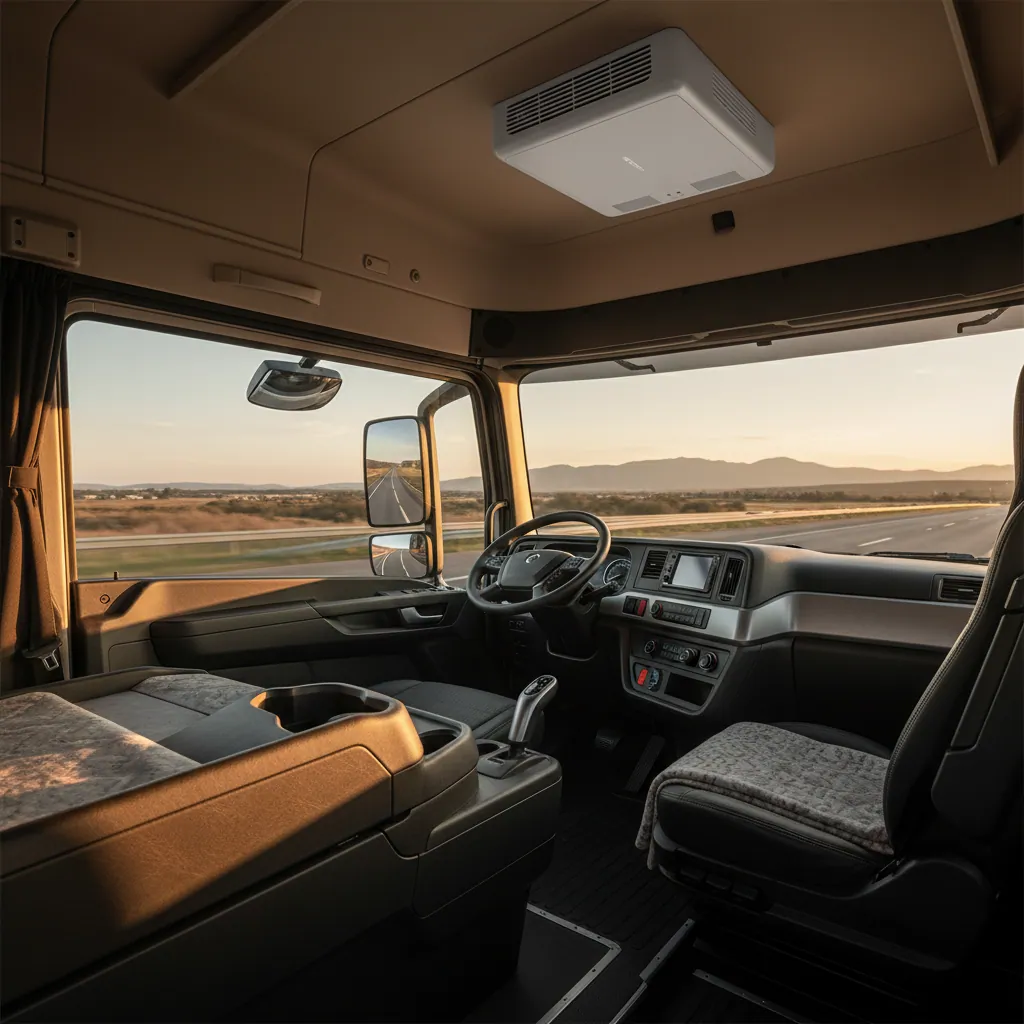
Morocco, the western gateway to Africa and a strategic bridge between Europe and the continent, possesses one of the most demanding transport environments in the world. The country's extensive desert routes, connecting the Atlantic and Mediterranean coasts to the interior and continuing toward sub-Saharan Africa, traverse some of the most extreme climatic conditions on Earth. The Sahara Desert, which covers much of eastern and southern Morocco, presents truck drivers with temperatures that regularly exceed 50°C, sandstorms that can reduce visibility to near zero, and vast distances between services that test both equipment and human endurance. For the thousands of trucks that navigate these routes daily—moving goods between Europe and West Africa, serving Morocco's mining and agricultural sectors, and connecting the nation's cities—heavy-duty parking air conditioning has become essential survival equipment.
The scale of Morocco's desert transport operations is immense. The country serves as the primary overland route for goods moving between Europe and West Africa, with thousands of trucks crossing the Strait of Gibraltar or arriving at Moroccan ports to continue their journeys overland. The Tiznit-Laayoune-Dakhla route along the Atlantic coast, the N13 through the Atlas Mountains and into the desert interior, and the trans-Saharan corridors toward Mauritania and Mali are among the most challenging roads in commercial transport. These routes pass through regions where summer temperatures routinely reach 50°C, where shade is virtually nonexistent for hundreds of kilometers, and where a breakdown can leave drivers stranded in life-threatening conditions. In this environment, the ability to maintain a cool cabin during rest periods is not a luxury but a matter of survival.
The specific challenges of desert operation create unique demands for parking air conditioning systems. Extreme ambient temperatures stress every component of an air conditioning system, requiring robust construction and high-capacity cooling systems. The dust and sand that characterize desert environments can destroy inadequately protected equipment, demanding sealed designs and effective filtration. The intense solar radiation creates additional heat loads that systems must overcome. The long distances between services mean that equipment must be exceptionally reliable, as assistance may be hours or even days away. And the stakes of failure are high—heat stroke can be fatal within hours in extreme desert conditions, making reliable cooling a critical safety system.
The CoolDrivePro VS02 PRO has proven itself in Morocco's demanding desert conditions through its robust construction and reliable performance. The unit's 9000 BTU cooling capacity provides the reserve capacity necessary to maintain comfortable cabin temperatures even when ambient temperatures approach 50°C. The sealed design protects internal components from the fine dust that pervades desert environments, while the high-quality air filtration system prevents dust ingress that could reduce efficiency and damage components. The unit's efficient power consumption maximizes runtime on battery power, essential in remote areas where engine charging may not be practical or desirable. The marine-grade construction materials resist corrosion from the salt air encountered on coastal desert routes.
The economic importance of Morocco's desert transport corridors drives continued investment in equipment and infrastructure. The country's phosphate mining industry, the largest in the world, depends on efficient transport to move product from desert mines to processing facilities and export terminals. Agricultural exports from the desert oases and southern valleys require reliable cold chain logistics. Cross-border trade with Mauritania, Mali, and beyond supports regional economic integration. Tourism to desert destinations like Merzouga and M'Hamid depends on transport services that can operate reliably in extreme conditions. Each of these economic activities requires trucks and drivers who can perform safely and efficiently in the desert environment.
Driver welfare in Morocco's desert transport sector has become an increasingly important consideration as the industry professionalizes. The Moroccan government and transport associations have implemented regulations governing driver working hours and conditions, recognizing that fatigue and heat stress are major contributors to accidents on desert routes. The distances involved in desert transport—journeys of 500-1,000 kilometers between major stops are common—make effective rest during mandatory breaks essential for safety. Drivers who cannot rest properly due to heat stress arrive at their destinations exhausted, creating risks not only for themselves but for everyone sharing the road. Heavy-duty parking air conditioning is recognized throughout the industry as essential equipment for desert operations.
Installation of parking air conditioning systems for Moroccan desert operation requires specialized expertise that accounts for the extreme conditions these systems must withstand. Electrical systems must be upgraded to handle the sustained high-current draws required for desert cooling, with many operators opting for lithium iron phosphate (LiFePO4) battery systems that offer superior performance in high-temperature conditions. Solar panel integration is particularly valuable in the desert, where abundant sunshine can provide meaningful supplementary charging to extend parking AC runtime. Mounting systems must be engineered to withstand the vibration of rough desert tracks and the occasional sandstorm winds that can buffet vehicles. Professional installation by technicians familiar with desert requirements is essential.
The specific routes that traverse Morocco's desert regions each present their own challenges. The N1 coastal route from Agadir to Dakhla runs through extremely arid territory with limited services, subject to sand-laden winds from the Sahara. The N13 through the Atlas Mountains and into the desert interior involves significant elevation changes and temperature variations. The trans-Saharan routes toward Mauritania cross some of the most remote and challenging terrain in commercial transport. Drivers on these routes must be prepared for all contingencies, including the possibility of being stranded by breakdowns or weather events. Reliable parking air conditioning provides a critical safety margin, allowing drivers to remain safe in their vehicles while awaiting assistance.
Maintenance protocols for desert operation are particularly rigorous given the harsh conditions. Air filters require frequent cleaning or replacement due to dust loading, with some operators cleaning filters daily during dusty conditions. Condenser coils must be kept free of dust to maintain heat transfer efficiency. Electrical connections require regular inspection to ensure they remain secure despite vibration. Refrigerant levels must be monitored, as even small leaks can significantly reduce performance when systems are operating at maximum capacity. Moroccan operators who maintain rigorous preventive maintenance schedules report significantly better reliability and longer equipment life.
The cultural and human dimensions of Morocco's desert transport sector add significance to investments in driver welfare. Many Moroccan truck drivers come from the southern regions that border the desert, and they understand intimately the challenges of operating in these conditions. Companies that invest in driver comfort build loyalty among these experienced professionals, gaining access to the knowledge and skills that only come from years of desert operation. In a market where experienced desert drivers are highly valued, providing superior equipment is a competitive advantage in recruitment and retention. The investment in heavy-duty parking air conditioning is thus an investment in human capital as well as physical assets.
Environmental considerations are increasingly important in Morocco's transport sector. The country has positioned itself as a leader in renewable energy and environmental sustainability, with ambitious targets for reducing carbon emissions. While diesel trucks will continue to dominate long-haul transport for the foreseeable future, technologies that reduce their environmental impact align with national priorities. Parking air conditioning eliminates the need to idle engines for cabin cooling, significantly reducing fuel consumption and emissions during rest periods. For Moroccan operators, adopting this technology supports both their business objectives and their contribution to national environmental goals.
Looking forward, Morocco's desert transport sector will continue to evolve as infrastructure improves and trade volumes grow. The development of the Tiznit-Dakhla expressway and other major road projects will facilitate increased traffic through the desert regions. The expansion of phosphate mining and other extractive industries will drive demand for transport services. Tourism development will bring more visitors to desert destinations. In this evolving landscape, the demand for reliable, heavy-duty equipment that can withstand desert conditions will only increase. Parking air conditioning will remain essential equipment for any serious operator in this challenging environment.
Ready to conquer Morocco's desert routes with heavy-duty cooling? Contact CoolDrivePro for desert-rated solutions and wholesale pricing. Email: info@vethy.com | WhatsApp: +86 18561534326
Why Parking Air Conditioners Are Essential for Morocco Transport
The transportation sector in Morocco faces unique challenges that make parking air conditioners not just a luxury but a necessity. Extreme temperatures regularly exceed 40°C (104°F) during peak seasons, creating dangerous conditions for drivers who must rest in their vehicles between shifts. Unlike idle-running engine AC systems, parking air conditioners operate independently of the engine, reducing fuel consumption by 0.8 to 1.5 liters per hour. For fleet operators in Morocco, this translates to significant annual savings across their entire fleet. Furthermore, anti-idling regulations are becoming more common in African urban centers, making standalone parking AC systems increasingly important for regulatory compliance.
The health implications cannot be overstated. Heat stress among commercial vehicle drivers in Morocco contributes to fatigue-related accidents, reduced productivity, and long-term health issues including cardiovascular strain and dehydration. Studies show that cabin temperatures in parked trucks can exceed 60°C (140°F) without cooling, far beyond safe thresholds. A quality parking AC system maintains cabin temperatures between 22-26°C (72-79°F) regardless of outside conditions, ensuring drivers remain alert and healthy. The initial investment in parking air conditioning pays for itself through reduced medical costs, fewer accidents, and improved driver retention.