Parking Air Conditioners for Ethiopia Agricultural Vehicles: Addis Ababa Highlands Farming
Agricultural vehicle cooling solutions for Ethiopia's high-altitude farming regions. Stay comfortable while operating around Addis Ababa, Awassa, and the Rift Valley.
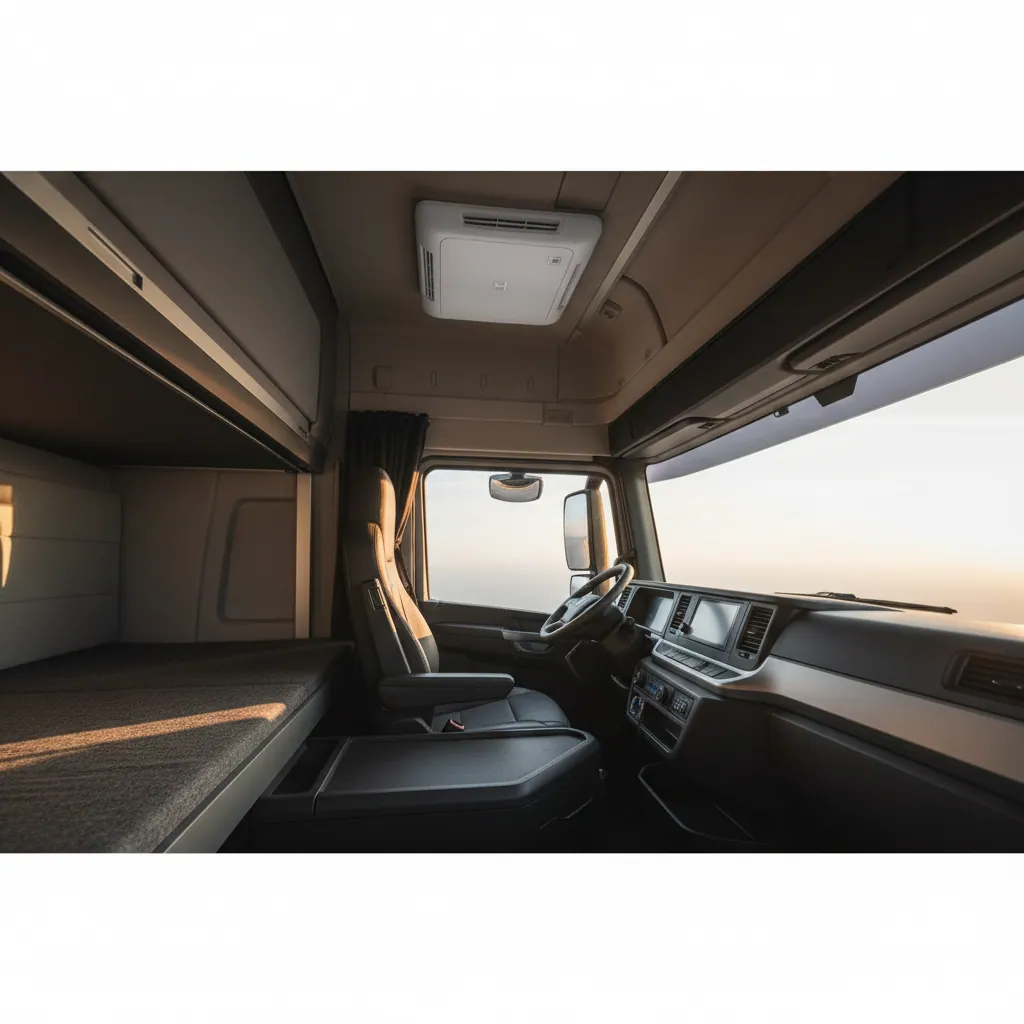
Ethiopia, often called the water tower of Africa due to its highlands that give rise to major rivers including the Blue Nile, presents unique challenges and opportunities for agricultural mechanization. While much of the world associates Ethiopia with high altitude and moderate temperatures, the reality for agricultural workers is more complex. The Rift Valley, Ethiopia's primary agricultural zone, sits at elevations ranging from 1,200 to 2,000 meters and experiences temperatures that regularly exceed 30°C during the day. The combination of high altitude—where UV radiation is more intense—and warm temperatures creates conditions where heat stress is a genuine concern for workers operating machinery. For the growing number of Ethiopian farmers and agricultural enterprises using mechanized equipment, including tractors, harvesters, and transport vehicles, parking air conditioning is emerging as an important tool for protecting workers and improving productivity.
Agriculture forms the backbone of Ethiopia's economy, employing approximately 70% of the population and accounting for a significant portion of GDP. The government has made agricultural modernization a priority, investing in irrigation, improved seeds, and mechanization to increase productivity and reduce dependence on rain-fed agriculture. As part of this modernization, there has been significant growth in the use of tractors, combine harvesters, and other mechanized equipment. Large commercial farms, particularly around Addis Ababa, the Awassa area, and the Rift Valley, operate fleets of vehicles that work long hours during planting and harvest seasons. The operators of these machines face challenging conditions: enclosed cabins with extensive glass exposure to the intense high-altitude sun, combined with the heat generated by the machinery itself. Without adequate cooling, these cabins become uncomfortable and potentially dangerous workplaces.
The Ethiopian highlands present a unique climatic profile that affects cooling requirements. Addis Ababa, the capital, sits at 2,355 meters above sea level and enjoys relatively mild temperatures year-round, with averages around 15-20°C. However, moving down into the Rift Valley or to lower elevation agricultural areas, temperatures rise significantly. The town of Awassa, located on the shores of Lake Awassa at about 1,700 meters elevation, experiences daytime temperatures regularly exceeding 30°C. The Afar region, in Ethiopia's northeast, includes some of the hottest inhabited places on Earth, with temperatures exceeding 50°C. Throughout these areas, the intense UV radiation at high altitude means that solar heating is more severe than at sea level. For agricultural vehicle operators working 10-12 hour days during critical planting or harvest periods, effective cabin cooling is essential for maintaining alertness and preventing heat-related illness.
The seasonal nature of Ethiopian agriculture creates periods of intense activity when machinery operates continuously for weeks or months. The main rainy season, from June to September, is followed by planting and then harvest periods that see equipment operating from dawn until dusk. During these peak periods, machinery operators may work six or seven days per week, with only short breaks for meals and rest. Traditional cooling methods—open windows or small fans—are often inadequate for these conditions, particularly in enclosed cabins with extensive glass exposure. The heat generated by engines and hydraulic systems adds to the thermal load, creating conditions where operators become fatigued and less productive as the day progresses. Parking air conditioning provides a solution that maintains comfortable working temperatures throughout the day, allowing operators to remain alert and productive during these critical seasonal periods.
The CoolDrivePro VS02 PRO, with its efficient 12V/24V operation and 9000 BTU cooling capacity, is well-suited to Ethiopian agricultural applications. The unit's ability to operate efficiently at high altitude makes it particularly appropriate for Ethiopian conditions, where electrical systems can be affected by the thinner air. The system's power consumption is modest enough to work with the standard battery systems found on agricultural machinery, while its cooling capacity is sufficient to maintain comfortable cabin temperatures even during the hottest midday periods. Ethiopian farmers and agricultural enterprises appreciate the unit's durability, as agricultural operations can be hard on equipment, with dust, vibration, and occasional impacts from rough terrain all presenting challenges that require robust construction.
Installation of parking air conditioning on agricultural vehicles in Ethiopia requires attention to the specific characteristics of these machines. Tractors and harvesters often have different electrical systems than highway trucks, with voltage systems that may vary between 12V and 24V depending on the machine's size and origin. Professional installation ensures that the parking AC is properly integrated with these systems without creating electrical conflicts or overloads. Mounting locations must be chosen to provide effective cooling while avoiding interference with the machine's operation or exposure to damage from crops, branches, or other hazards encountered in the field. Ethiopian installers are developing expertise in these specialized applications as adoption increases.
Health and productivity considerations drive much of the interest in parking air conditioning among Ethiopian agricultural enterprises. Heat stress reduces cognitive function and physical performance, meaning that operators working in overheated cabins are less productive and more prone to errors that can damage equipment or crops. Studies in agricultural settings have shown that heat stress can reduce worker productivity by 20-30% during hot periods—a significant impact during critical seasonal windows when every hour of productive work matters. Additionally, the health impacts of chronic heat exposure, including dehydration and heat-related illness, represent costs in medical treatment and lost work time that can be avoided through proper cooling. For Ethiopian agricultural businesses operating on thin margins, these productivity and health benefits translate directly to improved profitability.
The economic case for parking air conditioning in Ethiopian agriculture is strengthened by the high value of the crops produced and the critical importance of timely operations. Ethiopian coffee, for example, is among the world's finest and commands premium prices, but harvest timing is critical for quality. Berries must be picked at optimal ripeness and processed quickly to maintain their characteristics. Similarly, the country's growing flower export industry requires precise timing for harvesting and transport. In these high-value operations, the cost of parking air conditioning is minor compared to the value of the crops being produced and the importance of efficient, error-free operations. Agricultural enterprises are increasingly recognizing that investing in operator comfort and productivity pays dividends in crop quality and operational efficiency.
Ethiopia's agricultural sector is also becoming increasingly mechanized as young people migrate to cities and labor costs rise. Large commercial farms are expanding, and the government supports this transition through programs that make mechanization more accessible. As farming becomes more industrialized, the expectations for working conditions are also rising. Equipment operators, particularly those with training and experience, can command better conditions and will gravitate toward employers who provide modern amenities including cabin cooling. This dynamic is driving adoption of parking air conditioning as a competitive necessity for agricultural enterprises seeking to attract and retain skilled operators in an increasingly tight labor market.

Looking forward, Ethiopia's agricultural sector appears poised for continued growth and modernization. Government initiatives, foreign investment, and the expansion of commercial farming all point toward increasing mechanization and professionalization. As the sector evolves, technologies that improve efficiency and working conditions—including parking air conditioning—will become standard equipment rather than optional extras. Ethiopian farmers and agricultural enterprises that invest in these technologies now will be well-positioned for this future, enjoying the immediate benefits of improved productivity and operator welfare while also being prepared for the competitive and regulatory environment that is developing. For a country where agriculture remains central to the economy and the livelihoods of millions, these improvements represent both economic opportunity and social progress.
Why Parking Air Conditioners Are Essential for Ethiopia Transport
The transportation sector in Ethiopia faces unique challenges that make parking air conditioners not just a luxury but a necessity. Extreme temperatures regularly exceed 40°C (104°F) during peak seasons, creating dangerous conditions for drivers who must rest in their vehicles between shifts. Unlike idle-running engine AC systems, parking air conditioners operate independently of the engine, reducing fuel consumption by 0.8 to 1.5 liters per hour. For fleet operators in Ethiopia, this translates to significant annual savings across their entire fleet. Furthermore, anti-idling regulations are becoming more common in African urban centers, making standalone parking AC systems increasingly important for regulatory compliance.
The health implications cannot be overstated. Heat stress among commercial vehicle drivers in Ethiopia contributes to fatigue-related accidents, reduced productivity, and long-term health issues including cardiovascular strain and dehydration. Studies show that cabin temperatures in parked trucks can exceed 60°C (140°F) without cooling, far beyond safe thresholds. A quality parking AC system maintains cabin temperatures between 22-26°C (72-79°F) regardless of outside conditions, ensuring drivers remain alert and healthy. The initial investment in parking air conditioning pays for itself through reduced medical costs, fewer accidents, and improved driver retention—a critical factor in Ethiopia's competitive transport industry.
Choosing the Right Parking AC System for Ethiopia Climate Conditions
Selecting the optimal parking air conditioner for operations in Ethiopia requires careful consideration of several factors unique to the regional climate and operating environment. The first consideration is cooling capacity, measured in BTUs (British Thermal Units). For standard truck cabins in Ethiopia's hot climate, a minimum of 7,000 BTU is recommended, while larger sleeper cabs or RVs may require 12,000-15,000 BTU units. The CoolDrivePro product range offers solutions across this entire spectrum, from compact rooftop units to powerful split-system configurations.
Power system compatibility is another crucial factor. Most commercial trucks in Ethiopia operate on 24V electrical systems, though many lighter vehicles use 12V. Matching the parking AC voltage to the vehicle's electrical system eliminates the need for voltage converters and maximizes energy efficiency. Battery capacity must support 8-12 hours of continuous operation for overnight rest periods. LiFePO4 (Lithium Iron Phosphate) batteries are increasingly preferred over traditional lead-acid batteries due to their superior cycle life (2,000-5,000 cycles vs. 300-500), lighter weight, and ability to discharge to 80-90% depth without damage. For Ethiopia operations, dust resistance and robust build quality are essential—look for IP ratings of IP54 or higher, reinforced condenser fins, and easily cleanable air filters. The harsh dust conditions on many African roads can quickly clog standard air filters, reducing cooling performance by up to 30% if not regularly maintained.
Installation Best Practices for Parking AC in Ethiopia
Proper installation is critical for the performance and longevity of parking air conditioners in Ethiopia's demanding environments. The most common installation type for trucks is rooftop mounting, which provides excellent airflow and keeps the cabin interior clear. Before installation, inspect the roof structure for adequate load-bearing capacity—most parking AC units weigh between 25-45 kg, and the mounting surface must support this weight plus vibration forces during transit. All roof penetrations must be sealed with high-quality marine-grade sealant to prevent water ingress, which is especially important during Ethiopia's rainy seasons.
Electrical wiring deserves particular attention. Use appropriately sized cables based on the current draw of your specific unit—typically 8 AWG (8 mm²) for 24V systems and 4 AWG (25 mm²) for 12V systems. All connections should be crimped (not just twisted), heat-shrink sealed, and routed away from heat sources and moving parts. Install an appropriately rated fuse or circuit breaker within 30 cm of the battery positive terminal. For vehicles operating on unpaved roads in Ethiopia, secure all wiring with UV-resistant cable ties and protective conduit to prevent chafing from vibration. The condensate drain must be positioned to discharge away from the vehicle body and any electrical components. In dusty environments, consider installing a pre-filter screen over the condenser intake to reduce the frequency of deep cleaning required.
Maintenance Schedule for Parking AC Units in Ethiopia
A proactive maintenance regimen is essential for maximizing the service life of parking air conditioners operating in Ethiopia's challenging conditions. The following schedule has been proven effective for fleet operations across the continent:
Weekly: Visually inspect the unit for loose mounting hardware or obvious damage. Check that condensate is draining freely. Wipe down the evaporator air intake grille.
Bi-weekly (every 2 weeks): Clean or replace the cabin air filter. In extremely dusty conditions (unpaved roads, construction zones, harmattan season), increase this to weekly. A clogged filter forces the compressor to work harder, increasing power consumption by 15-25% and reducing cooling output.
Monthly: Clean the condenser coils with compressed air or a soft brush, working from inside out to push debris away. Inspect all electrical connections for corrosion or looseness. Check refrigerant sight glass (if equipped) for bubbles indicating low charge. Verify that the condensate drain hose is clear.
Quarterly: Inspect the mounting sealant for cracks or separation. Test the low-voltage cutoff function to ensure batteries are protected. Check belt tension on belt-driven components (if applicable). Lubricate any accessible fan motor bearings with manufacturer-recommended lubricant.
Annually: Have a qualified technician perform a full system check including refrigerant pressure measurement, compressor current draw test, and thermostat calibration. For units operating year-round in Ethiopia, this annual service is critical for catching issues before they cause system failure. Keep detailed maintenance logs for each unit in the fleet—this data helps predict component replacement schedules and supports warranty claims if needed.
Frequently Asked Questions About Parking Air Conditioners
Q: How long can a parking AC run on batteries alone?
A: Runtime depends on battery capacity, AC power consumption, and ambient temperature. A typical 24V parking AC drawing 40-60 amps per hour can run 8-12 hours on a 200Ah LiFePO4 battery bank. In Ethiopia's extreme heat, runtime may be 10-15% shorter due to higher compressor duty cycles. Adding solar panels (200-400W) can extend daytime runtime significantly.
Q: Can I install a parking AC myself, or do I need a professional?
A: While experienced DIY installers can handle the mechanical mounting and basic wiring, professional installation is recommended for the refrigerant connections (split systems) and electrical integration with the vehicle's existing system. Improper installation voids most warranties and can create fire hazards from undersized wiring.
Q: What is the difference between a rooftop AC and a split-system parking AC?
A: Rooftop (all-in-one) units contain all components in a single housing mounted on the vehicle roof. They are simpler to install but may add height that affects clearance under bridges or in parking garages. Split systems separate the compressor/condenser (mounted outside) from the evaporator (mounted inside), offering more flexible installation options and potentially quieter indoor operation. CoolDrivePro offers both configurations to suit different vehicle types and user preferences.
Q: How much fuel does a parking AC save compared to idling the engine?
A: Engine idling for air conditioning consumes approximately 0.8-1.5 liters of diesel per hour. A battery-powered parking AC costs essentially zero fuel during operation (battery charging occurs during driving). For a driver resting 8 hours daily, this saves 6-12 liters of fuel per day, or roughly $2,000-4,000 USD annually depending on local fuel prices. The parking AC unit typically pays for itself within 6-12 months through fuel savings alone.
Q: Do parking air conditioners work in extremely humid conditions?
A: Yes, modern parking AC systems effectively dehumidify cabin air as part of the cooling process. The evaporator coil condenses moisture from the air, which drains through the condensate line. In very humid regions, ensure the drain is clear and consider units with enhanced dehumidification modes. CoolDrivePro units are tested to perform in humidity levels up to 95% RH.
Cost-Benefit Analysis: Parking AC Investment in Ethiopia
For fleet operators and independent truck owners in Ethiopia, understanding the financial case for parking air conditioners is crucial for making informed investment decisions. The total cost of ownership for a quality parking AC system includes the unit purchase price (typically $800-2,500 depending on capacity and features), installation costs ($200-500 for professional installation), battery bank investment ($400-1,500 for LiFePO4 batteries), and ongoing maintenance ($50-150 annually). Against these costs, the savings are substantial and measurable.
Fuel savings represent the largest benefit. A truck idling for 8 hours consumes 6.4-12 liters of diesel. At current Ethiopia fuel prices, this equates to $8-20 per rest period. Over 250 working days per year, the fuel savings alone total $2,000-5,000 annually per vehicle. For a fleet of 20 trucks, this means $40,000-100,000 in annual fuel savings. Engine maintenance savings add another $500-1,000 per vehicle annually, as reduced idling hours extend oil change intervals by 30-40% and decrease carbon buildup in the combustion chamber. Driver retention savings, while harder to quantify, are equally significant. Recruiting and training a replacement driver in Ethiopia costs an estimated $2,000-5,000, and better working conditions reduce turnover by 15-25%. Most fleet operators in Ethiopia report complete return on investment within 8-14 months of parking AC installation.
Future Trends: Parking AC Technology in Ethiopia
The parking air conditioner market in Ethiopia is poised for significant growth and technological advancement over the coming years. Several key trends are shaping the future of this industry:
Solar integration is becoming standard rather than optional. Next-generation parking AC systems incorporate built-in solar charge controllers and are designed to work seamlessly with rooftop solar panels rated at 200-600W. In Ethiopia's abundant sunshine (average 5-7 peak sun hours daily), solar supplementation can provide 30-50% of total cooling energy during daytime rest periods, dramatically extending battery runtime and reducing the required battery bank size.
Smart connectivity is another major trend. IoT-enabled parking AC units allow fleet managers to monitor cooling system performance, energy consumption, and maintenance needs in real time across their entire fleet. This data enables predictive maintenance (replacing components before they fail), energy optimization (identifying units operating below peak efficiency), and compliance reporting (documenting anti-idling adherence for regulatory purposes).
Refrigerant evolution continues as the industry transitions to lower-GWP (Global Warming Potential) options. R32 is replacing R410a in new designs, and future systems may adopt even lower-GWP refrigerants like R290 (propane) as safety standards evolve. For buyers in Ethiopia, choosing a unit with modern refrigerant ensures longer regulatory compliance and better environmental performance. CoolDrivePro remains at the forefront of these technological advances, continuously developing products that deliver superior performance, efficiency, and connectivity for the African market. For deeper detail, see our LiFePO4 battery sizing for parking AC.